Just The Tonic with Katie Derham · Series 1, Episode 2
Just The Tonic, Series 1, Episode 2: The Power of Song
Released 14 October 2021 · 29 minutes · Presented by Katie Derham
Prefer to listen? Play the audio here, or listen on Acast.
🎵 Chapters
Jump straight to the part you want. Click any timestamp to play the video from that point.
🎧 About this episode
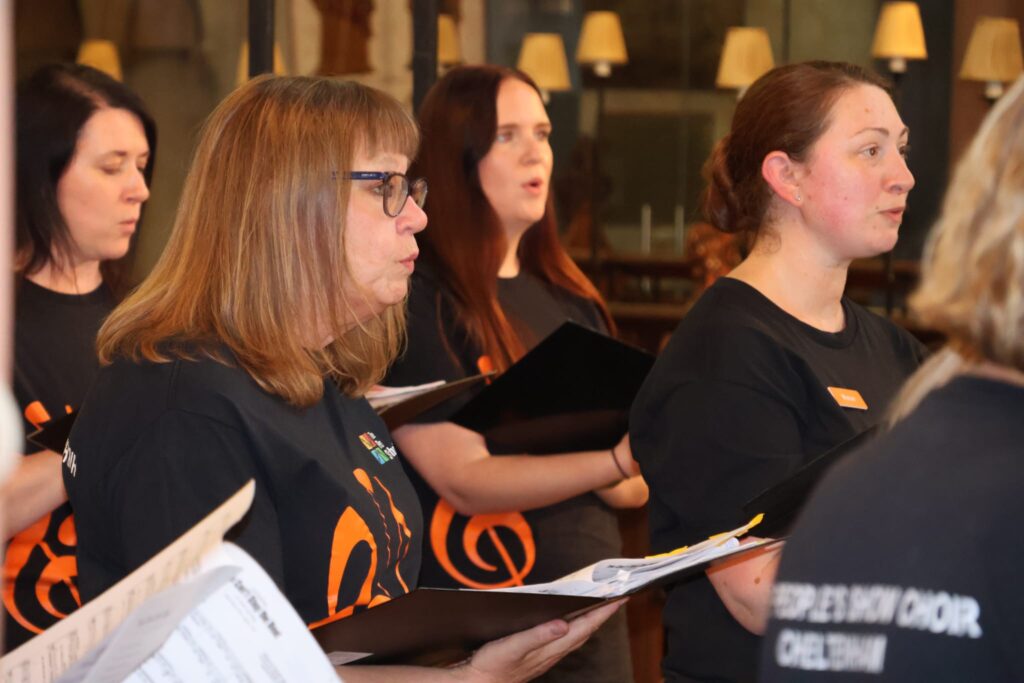
Katie Derham explores the benefits of singing in a choir with TPO’s Halesowen Show Choir and choir leader Ula Weber, the Hallé Ancoats Community Choir, Baz Chapman on social prescribing, and Sir Mark Elder.
Episode details
- Released
- 14 October 2021
- Length
- 29 minutes
- Presenter
- Katie Derham
- Series
- Just The Tonic with Katie Derham
Questions answered in this episode
❤️ Get involved
Try The People's Show Choirs, The People's Orchestra or the Big Band – your first two sessions are free. Every membership funds our work supporting people into employment and through financial crisis.
Full transcript
This transcript was made from the episode’s captions and lightly edited for readability. Click any timestamp to play the video from that point.
Introduction (0:00)
[Music]
0:10 Perhaps you sing in the shower, in the car, or in the kitchen when you’re making your dinner. But have you ever thought about singing in a choir?
0:19 “There is something about singing as a group that just gives you such a great positive feeling.” “Well, if you want to be happier, if you want to have a lot of fun and you want to be able to express yourself, there’s nothing better than a choir.” “Singing in a choir is not just about making music, it’s about being part of a community too.”
[Music]
0:43 “I just love being part of a choir, that’s the main thing. And it’s amazing when you live in a big city to find a big group of people that you can call your friends.” “And it’s life-enhancing in so many ways.” “It’s a cliché again, isn’t it – keeps you young. I think it does.” “Yeah, it’s great exercise.”
0:59 Welcome to Just The Tonic with me, Katie Derham, a new podcast series that looks at how music and all the arts do so much to make the world a better place for all of us. In the first episode we met the staff and players from The People’s Orchestra, a fantastic community orchestra and so much more in the West Midlands.
1:24 In this episode we’ll be exploring the benefits of singing in a choir with the Halesowen community choir, one of The People’s Orchestra’s many show choirs in the area, and also with the Hallé Orchestra’s Ancoats Community Choir in Manchester.
1:33 Now, there are countless studies that show how singing in a choir has tremendous benefits for physical and mental wellbeing.
1:50 “The choir makes a huge impact on your mental health. I always feel like I come out of it in a much better mood, and just being a lot more resilient afterwards.”
1:57 And there’s a growing movement for singing to be prescribed as a treatment for medical conditions. “If you can get yourself involved in something like a choir like this, it’s far better than any tranquilliser or antidepressant that can be prescribed for you.”
2:16 We’ll be hearing more from Hallé Ancoats Community Choir later, and we’ll also be hearing from Sir Mark Elder, the legendary music director of the Hallé Orchestra. “Singing is the way into the community. Everybody, however shy they are, has a voice.”
2:32 How very true. So let’s hear from the lovely voices of the Halesowen community choir, one of The People’s Orchestra’s newest show choirs, as they sing about the pleasures of a very well-known tipple.
Meet the singers (2:45)
[Music]
2:53 So here we are at the Somers Social Club in Halesowen (venue spelling unconfirmed). This is a venue that we’re using for the latest of The People’s Show Choirs.
[Music]
3:05 We’re here for our second rehearsal, run by Ula Weber, who is the most amazing choir leader.
[Music]
3:12 Ula Weber: Hi, my name is Ula Weber, and I’m the choir leader for the Halesowen People’s Show Choir, but I’m also the choral programme director for The People’s Orchestra.
[Music]
3:27 I’ve always sung, since I was a little girl. I have two brothers – there’s only two and a half years between the three of us – and ever since we were children we’ve been singing in harmony. We absolutely love singing together, and that passion for singing has stayed with me all my life.
3:43 I joined a choir when I was 11 years old and I’ve been singing in choirs ever since. I can’t quite put my finger on why it is that I love to sing in a choir, but I guess it’s the spirit. It’s the community of singing with people, and it doesn’t matter who they are, what walk of life they come from. We’re all here to sing and to make music together, and that’s something really very, very unique and very special.
[Music]
4:09 The People’s Orchestra have a network of show choirs around the county, and hopefully wider in the future. It’s bringing together people from all over the area. They are a mixed background of people, experience levels, ability in terms of sight-reading and singing – some people who’ve never sung in a choir before, some people for whom this is their third or fourth choir a week that they sing in, and everybody in between.
4:33 Elena Roshbury (spelling unconfirmed): My name is Elena Roshbury and I am a music teacher for Dudley Performing Arts. I’ve been singing all my life – as a child in church choirs and with my family – and then I had a break from that for a while, and rejoined a choir when I was a new mum, actually. I had a baby in 2004 and decided that I needed to sing again. I would say to anyone who was thinking about joining a choir: just do it.
[Music]
5:06 It’s been a really difficult year, being in lockdown and not being able to go out and sing with each other. So now that we can, it’s a lovely way to get out again and meet new people and just enjoy the music.
[Music]
Can you read music? (5:30)
5:30 Katie: So do you have to be able to read music to sing in a choir?
5:34 It doesn’t matter if you can’t read music. Lots of choirs don’t use music at all, and the leader is always really good at helping people who perhaps can’t read music very well.
5:44 Ula: You don’t even need to know which way round to hold the music to be a member of The People’s Show Choir. We do use music, but you don’t need to be able to read it, because that’s one of the things that will come with time – the ability to know whether the notes are going up or down. But you can choose to use lyric sheets instead. No, there’s no expectation at all about reading music.
6:08 Katie: More to the point, perhaps – what if you really don’t think you can sing?
6:12 Ula: I absolutely think anybody can sing. It doesn’t matter whether you think that you’re only a singer in the shower. Everybody has a voice, and everybody can train their voices. If they don’t feel that they can sing in tune, that’s usually their own opinion, obviously, but it’s usually just that they haven’t had enough ear training.
6:31 Katie: So is there really no such thing as being tone deaf?
6:35 Ula: There is such a thing as tone deafness, but from what I know it’s very, very, very rare. It’s usually that somebody hasn’t developed their inner ear and their sense of pitch, and it just needs a little bit of help and support.
[Music]
6:53 Katie: We asked Ula what she would say to someone who’d really like to join a choir, but who has been told at some point that they really shouldn’t.
7:01 Ula: You know, I come across this time and time again when I’m working with teachers who were tapped on the shoulder when they were at school and told “you just mime”, and it stays with them for the rest of their lives. It’s such a negative experience. So I would say to those people: it is absolutely not true. A lot of children and young people don’t develop their singing voices until they’re quite a bit older, so we should be encouraging people of all ages to sing and enjoy singing. So I would say come along to a choir. A choir is the best way for you to improve your singing, improve that inner ear, work on pitch, and work on all those things that a choir can do – and it will ultimately develop confidence.
[Music]
7:47 Katie: So there you have it – Ula believes that anyone can sing. So if you’ve been told in the past that singing is not for you, perhaps it is time you gave it a go.
7:54 Ula (in rehearsal): This one is a brain gym one, so let’s have a D major, please.
7:58 Katie: And now, of course, at last you can get together to do it.
Can you sing? (8:00)
8:04 Sue from the Halesowen choir is delighted to be able to sing with her friends again.
8:08 Sue: It’s very exciting to get back singing again after having had 18 months of relative silence. I missed it hugely. I didn’t know how much I depended on singing until it was taken away from me.
8:19 My father sang – he had a beautiful voice – and I was used to hearing him sing, so I always had music in the house. When I was a child I sang in the choirs at school, and then when I was older I sang with an amateur operatic society. But for various reasons I then stopped singing, and it was only when I heard about this that I started it up again. It’s one of the best things I’ve done in a very long time.
8:52 Katie: And for Sue, being part of the choir is much more than just singing.
8:56 Sue: It’s the fact that you make friends, and it’s the companionship. When you all first meet, there’s never any need for an icebreaker game, because we’re all here for the same reason. And from a mental point of view, it’s hugely beneficial to me.
[Music]
9:16 It’s the release of tensions, and it’s taking you away from things that are perhaps stressful during your normal day, and doing something that is just pure, 100% pleasure. If you can get yourself involved in something like a choir like this, it’s far better than any tranquilliser or antidepressant they can prescribe for you. And it’s easy to do, and yes, it’s affordable as well – so far better than a lot of medicines that can be handed out.
9:39 Katie: Prescribing the arts in place of medication – what’s known as social prescribing – is, I’m happy to say, becoming much more widely available. Your GP can now prescribe an activity rather than drugs.
What is social prescribing? (9:58)
[Music]
10:02 My goodness!
[Music]
10:06 Katie: Baz Chapman is The People’s Show Choir accompanist. He also develops singing programmes in the Singing for Health Network. Here’s his take on what social prescribing really is.
10:13 Baz Chapman: Social prescribing is part of the NHS Long Term Plan, and recognises that some of the things that people will need some kind of help with may or may not be treatable with drugs or therapy – the kinds of things that a GP would prescribe. So social prescribers are people who are based all around the country who can focus on what matters to people, what their interests might be, what would really help them in their situation. And they will be connected with all the opportunities that are open in that area, whether that’s a gardening group, a cycling club or a choir.
[Music]
10:56 Humans have been singing together since the dawn of time – to communicate, to express emotion, to bond with each other – and the benefits of singing are really quite extraordinary. Singing is such a brilliant way to address things like feeling withdrawn or anxious. It can help with depression, it can help with medical issues like dementia or stroke recovery. And that thing of coming together with other people to sing and to make harmony, and to release those endorphins and serotonin and the chemicals that we know are released when people sing together – that’s really powerful.
11:30 So the network is looking at how we can better support more people to be joining singing groups, and create something in this country that is really exciting – where, as well as people just coming to sing together because we know it’s wonderful, it’s what people do, we can also really help some of those people who are struggling in some way.
11:54 I think there’ll be new choirs springing up. There’ll be choirs that will address specific health issues – there are already lots of dementia choirs around the country – and I hope that lots of choirs will want to become social-prescribing-friendly choirs: that they’ll get in touch with the local social prescribers and start to accept people who will get a really great, tangible benefit from coming and singing in those groups.
12:18 Katie: And we’ll give out information on how to get involved if you’re interested in social prescribing – whether it’s something for you, or something you’d like to help be part of – at the end of the episode. Here’s Ula again.
12:31 Ula: In the country there are over 40,000 choirs around the UK. Lots of them are community choirs. I’ve got a number of friends and very dear colleagues who run choirs up and down the country. For example, my counterpart in Manchester is Stuart Overington, who conducts the Hallé community choir.
12:50 Stuart Overington (in rehearsal): Should we start with a bit of a warm-up? Stand up for me.
12:53 Katie: The Hallé Ancoats Community Choir is part of Manchester’s renowned Hallé Orchestra. They’re based in the fabulous Hallé St Peter’s, which is a converted church in the Ancoats area – a part of the city that’s seen a massive amount of regeneration in recent years. We went along to meet the choir members and their leader, Stuart Overington.
What is a community choir? (13:14)
[Music]
13:23 Stuart Overington: The Hallé Ancoats Community Choir is a community choir, as it says in the title. It’s an about 80-strong group of adults who come together on a Sunday evening to experience singing together. There’s no prerequisite required – it’s a non-auditioned group. We have people in the choir who have a musical background themselves, but we also have lots of people who don’t read music and are very, very new to singing. And what binds the group together is that it’s all about trying to discover or experience that joyful, or emotional, or just engaged thing of singing in a choir, or together.
[Music]
14:10 Jim Battle: All right – my name’s Jim Battle. I’m retired, but I’m involved with housing associations and schools in Manchester and Salford.
[Music]
14:23 I always thought choirs were reading music and complicated harmonies, and I didn’t think I was up to it. But when I got here I was made really welcome, and the way in which the choir is organised and led just makes it so easy for people to come along who enjoy singing. They may not be very good at it, but they really enjoy singing, and singing together – and I think that is the heart and soul of the Hallé Ancoats choir.
14:47 Stuart (in rehearsal): Your hands on your wobbly bits, and try and make them less wobbly. Ready?
14:54 Jim: It just transforms you, really. It lifts you. I said it was a bit like when you go on holiday and you step out of the aeroplane and the warm air hits you – that’s what it feels like. It’s a lovely feeling.
15:03 Hannah Messer: My name’s Hannah Messer, I’m an HR business partner. Being part of the choir is important to me for a sense of community, I think – particularly at the moment, I’m working from home and I live by myself, so even with a good network of friends and family it’s quite easy to go a long time without seeing somebody. And coming to the choir and being part of that is great, just to see people and socialise.
15:28 There is something about singing as a group that just gives you such a great positive feeling. I can be having a rubbish week, worried about work, but as soon as we sing the first song I just feel so much more energised and positive.
15:45 You really don’t have to be able to sing well – you really don’t. It’s a good job that’s not a prerequisite for this one! But there are some really good singers – some really good ones – and a lot like me that are quite average, who just kind of lift the numbers and lift the sound. But you can definitely tell there are some extremely good singers.
16:04 Stuart (in rehearsal): Can you feel that sense of openness? Can you hear it?
Community choir members (16:07)
16:14 Linda: My name’s Linda and I’m an operations manager for a medical and research device company – so something that’s not at all related to singing or music. Just coming to choir makes a brilliant change from that sort of work.
[Music]
16:34 My daughter started coming to the children’s choir, and that was how I got involved in this choir. I was volunteering – I think I was on a cake stand raising money for the children’s choir – and attended a corporate choir event at which they mentioned that there was a community choir. So I decided to come along and get involved. So yeah, for the last 10 years I feel like I’ve been very involved with the Hallé, and not looked back either, really. It’s just been such good fun.
17:08 I think probably our youngest members are, I don’t know, early 20s, and we’ve got one lady who’s in her 90s.
[Music]
17:23 Sam: My name’s Sam. I am a member of the choir – Stu is also my partner. I was fortunate enough to go to a secondary school which had music specialist status, so lots of singing, and my dad’s a professional musician as well. And then I guess post-school there’s a bit of a gap – you’re looking for extracurricular things, things in your spare time – and I definitely found singing. I’ve lived in two major cities, Manchester and London, and in both cities I made sure I found a choir, because it’s just a nice way of meeting people, making friends and having fun, really. My mum always said to me, you should try and find lots of nice things to do in your week, and this is for me a big part of my week – a fun thing to do, something I always look forward to.
18:04 [Choir singing]
18:10 We sing a very wide range of songs. I don’t even know how to describe it, really. It tends to be all given to us by rote, so we don’t even see the words a lot of the time. We’re not familiar with the tunes, but we just learn it, and that’s part of the fun really, because we’re thinking “what on earth is this that we’re singing?” – and then within 10 minutes it sounds amazing.
18:30 It’s a mixture of things. We’ve done some pop in the past, we do spirituals, we do folk songs. Stuart and Matt do compose things themselves – they go, “yes, this will work really well for a community choir”. And being Stuart’s partner, I do actually get to see some of that composition process. He is actually the kind of person that wakes up in the middle of the night singing a tune and has to get a pen and paper to start writing things down.
18:52 [Choir singing] …and that, I feel, is the mantra of the Hallé Ancoats Community Choir: sing together.
Sir Mark Elder (18:53)
19:03 Katie: The Hallé Orchestra’s music director, Sir Mark Elder, has long been a champion of the Hallé’s outreach work. He is a very busy man, but I managed to find time in his schedule to ask him just how important these choirs are to the local community.
19:20 Sir Mark Elder: Singing is the link. Singing is the way into the community. Everybody, however shy they are, has a voice. And we believed that what we had to do was to open out the idea of what an orchestra should be in a community.
19:36 I think it’s important to stress that when we first went to Ancoats and we wanted to make our centre there, we were aware that we had to make sure that the local community welcomed us. Because Ancoats was, as I’m sure you know, a huge part of Manchester’s heyday, and it has been pretty run down and derelict. And so we formed the choir as a way to say to the community: you can be part of what we all believe in. We’re not just using this church as a rehearsal venue – it’s a centre for music in this area. So to me, this is a dream come true.
20:16 Katie: Everybody can join – the community choir is open to everybody. It’s free. Come along on a Sunday and see how you do.
[Music]
20:39 Jim: One of the risks of being a man in a choir is that there’s probably fewer men than there are women in the choir, and therefore basses and tenors – sometimes you might feel you’re doing a solo part. But I think it’s important that we try and build that up, and that you can break some of the myths down. You know, what are the barriers for men coming to sing? I must admit I was nervous. I didn’t want to show myself up. I was afraid it might have been too technical. I’m not a musician. I didn’t think I had a very good singing voice – I probably haven’t got a very good singing voice – but enjoying singing, and enjoying singing with others, I think is something we could actually promote. I think we’ve got a barrier to overcome, persuading men. I think they’ve managed to do it in Wales with the male voice choirs, so I’m pretty sure we could try and do that in Manchester.
[Music]
21:33 Katie: The men of the Hallé Ancoats Community Choir in great voice there – and it would be fantastic to hear more basses and tenors in community choirs all over the country, because, as we’ve heard, it’s not only great fun, but there are such great health benefits too.
[Music]
21:49 Hannah: Absolutely, the choir makes a huge impact on your mental health. I think that is one of the main things that people gain from it. There is something – I’m sure it releases endorphins or something – singing in a group. But it does just help you relax, focus on something else. And even just the act of focusing on your breathing, and just standing still and thinking about something else for a short period of time, makes such a huge difference. I always feel like I come out of it in a much better mood, and just feeling a lot more resilient afterwards. It really does make a big impact on your mental health.
22:17 To be part of something bigger than yourself, to be a small cog in a very big wheel, can be life-changing.
22:29 It’s good for things like your memory – having to memorise all these songs just kind of keeps you… I suppose it’s a cliché again, isn’t it – keeps you young. But I think it does.
22:40 Sir Mark Elder: It’s a lovely fact that when people sing together, little by little their heartbeats become the same. And the idea of a shared heartbeat is a wonderful image, isn’t it? That you can get not only your sense of rhythm and your sense of pitch coordinated, but the pulse of your body as well. And people can lose themselves in this, and they can find excitement in it in a way that they’ve experienced in no other part of their life. And that, of course, takes us to who does this with them – the people who do it. We’ve got incredibly important and talented people.
23:18 It awakens something, I believe, about our ability to empathise with one another, our ability to really hear each other.
23:26 It’s like therapy – you’re constantly re-engaging your own emotions. It’s great exercise as well. You never really realise how much exercise you get when you’re singing, but you feel tired afterwards, so it must be doing something!
23:41 Katie: You might not think of singing as a workout exactly, but there are plenty of physical benefits to singing regularly. A joint study between Harvard and Yale universities in 2008 showed that regular singing can even increase life expectancy. And in a very specific way, English National Opera set up their Breathe programme during the pandemic to help people use singing to recover from some of the respiratory effects of Covid.
24:07 Of course, over the last 18 months many choirs – The People’s Orchestra show choirs and Hallé Ancoats Community Choir amongst them – had to take their rehearsals online.
24:23 It’s amazing how they kept it going all through Covid, and how many people took part. And it was a huge relief then as well – obviously a very stressful time – to be able to each week have some time to sing and hear other people singing.
[Music]
24:38 I was singing in my living room with very thin walls, so I was very sorry for my neighbours, but I tried anyway.
24:43 Katie: But for some choir members, singing remotely was a painful reminder that they weren’t able to be together to sing.
24:52 I took part in the Facebook Live, especially at the beginning, but towards the end I was actually finding it quite upsetting that we weren’t all together. So I had to just stop taking part, which is so sad, isn’t it?
25:09 I must admit, singing just to an iPad for me didn’t work, because it reinforced the fact – it’s singing together with other people.
What is a choir? (25:17)
25:17 So when we came back for the first time…
[Music]
25:24 …it was really important to get that feel – that feel of a choir, the sound that you pick up from the people next to you, hearing other voices. It was just beautiful. It was a lovely feeling, and it really hammered home to me what a choir is about: singing together and enjoying it.
[Music]
25:47 What I do see every day in my practice is how the arts have an ability to find common ground with people. When people might feel like they’re very different – from different communities, from different backgrounds – you find the common humanity that lies between us: the way that we respond to a piece of music, the way that we hear a harmony change, or try and sing certain words. And I think unlocking that in yourself is such a valuable skill – something you can take into all aspects of your life.
[Applause]
26:29 I think it’s endless what you can get out of engaging with the arts, and I think it’s so important that we keep them alive and strong in our communities.
26:38 Katie: Absolutely. We’ve heard that singing in a choir can boost your social life, reduce your stress levels, beat the blues, help you exercise – I mean, who needs the gym?
[Music]
26:48 Here’s The People’s Orchestra show choir accompanist Baz Chapman, from the Singing for Health Network, on how you can find out more about social prescribing in your area.
26:56 Baz Chapman: If people are interested in social prescribing – either for themselves or for someone they know – or if they represent a singing group or any other kind of group, contact your local GP. They should know who the social prescribers are for that area and can put them directly in touch. And every social prescriber who I’ve spoken to is really keen to hear from people from both sides: people who are in need of help or treatment, but particularly from the kinds of groups that can accept those people. And they can do loads to help understand what that relationship might look like.
27:35 Katie: Thanks to Baz, to his wife, choir leader Ula Weber, and the singers of The People’s Orchestra Halesowen Show Choir; and the singers of the Hallé Ancoats Community Choir, their choir leader Stuart Overington, and to Sir Mark Elder, music director of the Hallé Orchestra in Manchester.
27:52 In the next episode of Just The Tonic, we’ll be looking at how we can be inclusive and diverse in music-making. I’m going to be speaking to Chi-chi Nwanoku, artistic director and founder of Chineke! Orchestra, the orchestra that provides career opportunities to established and up-and-coming ethnically diverse classical musicians. I’ll be chatting to Bradley Wilson, who’s the new conductor of The People’s Orchestra Rusty Players Orchestra and a player in Chineke! too, and to the acclaimed jazz musician Xhosa Cole, who also just happens to be a People’s Orchestra regular.
28:23 If you’re thinking about joining a choir, search online for community arts organisations in your area, or get in touch with Arts Council England, the Arts Council of Wales, the Arts Council of Northern Ireland or Creative Scotland. And you do not have to sing to get a taste of all this choral goodness – go and support your local choir the next time they perform, and you will be uplifted.
28:49 Just The Tonic with me, Katie Derham, was produced by Jill Davis and is a Peanut and Crumb production, supported by The People’s Orchestra and Arts Council England.
28:58 There you go.
Previous episode · Series 1, Episode 1
The People's Orchestra
The first episode of Just The Tonic with Katie Derham introduces The People's Orchestra: CEO Sarah Marshall on how it began, saxophonist Xhosa Cole, players Jacqueline Burke, Annie Routley and Nigel Tyson, orchestra manager Liz Read, and composer John Altman.
Next episode · Series 1, Episode 3
Music is for Everyone
Katie Derham explores diversity in classical music with Bradley Wilson, conductor of TPO's Rusty Players Orchestra, Birmingham saxophonist Xhosa Cole, and Chi-chi Nwanoku, founder of Chineke! Orchestra.