Benefits of Joining a Community Choir: What the Evidence Shows
The Benefits of Joining a Community Choir: What the Evidence Shows About Mental Health, Loneliness and Belonging
Joining a community choir is associated with measurable improvements in mood, confidence, social connection and stress, according to both peer-reviewed research and first-party survey data from The People’s Orchestra‘s 2026 member survey of 152 respondents. This piece combines the published evidence base on singing and wellbeing with proprietary data from a live UK community choir network — and with one member’s real journey through it — to explain why choirs are increasingly recognised, including by the NHS through social prescribing, as a legitimate, low-cost intervention for loneliness and mental health.
The Night Everything Was Still the Same, Except One Thing
She almost didn’t go in. She’d sat in the car park for four minutes — she counted them, later, without meaning to — telling herself she could still just drive home, that nobody would know she’d come this far and turned back. She’d been signed off work with stress a few weeks earlier, and the idea of standing in a room full of strangers and singing, of all things, felt like exactly the kind of thing her old self would have laughed off.
She went in anyway. The hall smelled of instant coffee and radiator dust, and someone was already laughing near the piano before she’d even found somewhere to put her coat. Nobody asked her why she’d come. Nobody needed to.
That single decision — four minutes in a car park, then a door — turned out to matter more than she expected. Months later, describing how things had changed, she put it simply: “Going to choir was the thing that gave me back some joy.” Asked to sum up the shift in one line, she moved from “down, lost and feeling very low” to “happier and more able to deal with issues as they occur.”
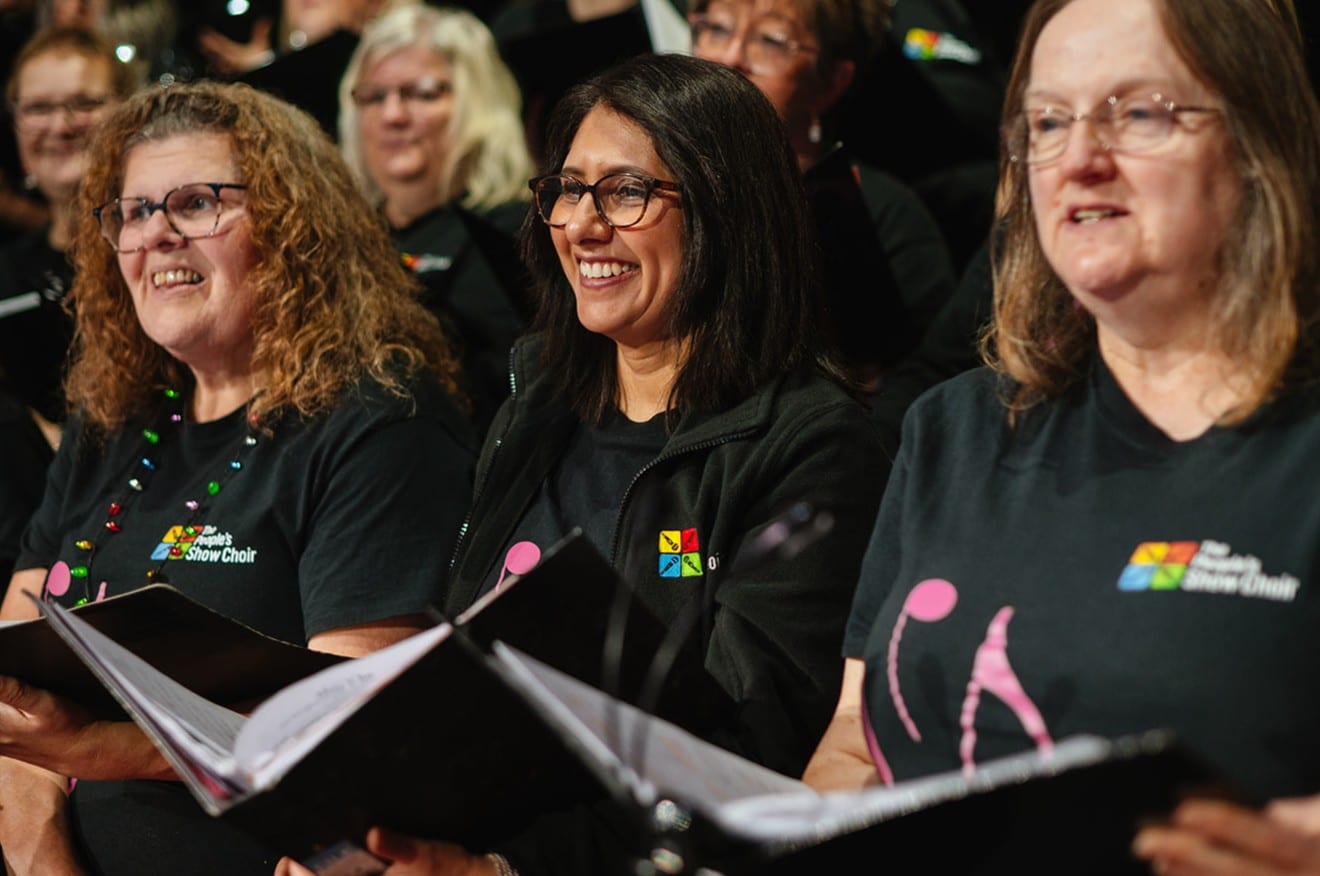
Her story is not unusual. It’s the story this data is actually about — one being lived out weekly by members of The People’s Show Choir in Wolverhampton and dozens of choirs like it across the UK.
Why This Topic Matters Right Now
Loneliness in the UK has become a recognised public health issue rather than a purely social one. The Office for National Statistics’ most recent published breakdown (survey period 7 January to 1 February 2026) found that almost a quarter of adults (23%) reported feeling lonely “often, always or some of the time,” with the 30–49 age group now reporting the highest rate (28%), closely followed by 16–29 year-olds (27%), compared with 19% of 50–69 year-olds and 16% of those 70 and over. Separate analysis suggests the number of over-50s experiencing loneliness in the UK rose roughly 49% between 2016/17 and 2025/26, reaching close to two million people, while the NHS has stated that the health impact of chronic loneliness is roughly comparable to smoking 15 cigarettes a day. Disconnected communities are estimated to cost the UK economy as much as £32 billion a year through associated health and productivity effects.[1][2][^3]
In response, the NHS has scaled up “social prescribing” — GP referrals to non-medical activities such as art, gardening, exercise and music groups — dramatically over the past decade. A 2025 analysis of 1.2 million patient records across more than 1,700 GP practices found an estimated 9.4 million GP visits involved social prescribing through 2023, generating 5.5 million referrals, far exceeding NHS England’s original target of 900,000 referrals a year.[4][5]
For the woman in the car park, none of this was a statistic yet. It was just a door she almost didn’t walk through.
What the Peer-Reviewed Research Shows
A growing body of academic literature supports the idea that choral singing delivers distinct psychological and physiological benefits beyond generic social contact. A 2024 cross-sectional study of 847 German choristers found that singing wellbeing and mental health improved with longer choir membership, more weekly singing hours, and higher engagement in choral activity, with benefits reported across all ages, genders and educational backgrounds.[^6] A 2025 neurocognitive study of 95 adults aged 21–88 found that higher choir singing frequency was associated with reduced depressive symptoms, which in turn mediated improvements in psychological and overall quality of life; longer lifetime duration of choir singing was also linked to better episodic memory and verbal fluency.[^7]
A cross-national qualitative study of choir members identified social networking and sense of belonging as the most frequently cited benefit themes, cited by 100 and 52 participants respectively out of 169, ahead of physiological and cognitive benefit categories.[^9] A 2016 study following London choir singers affected by cancer — as patients, caregivers or healthcare providers — found that singing significantly reduced anxiety, and that just one choir practice session reduced stress hormones and increased immune-supporting cytokines, providing physiological evidence alongside self-reported outcomes.[^10]
Not every large-scale study has found significant links between singing and population-level health outcomes — two older Swedish and Finnish epidemiological studies found no significant relationship — but researchers reviewing this evidence attribute the null result to methodological limitations rather than treating it as contradicting the broader, more consistent body of smaller qualitative and experimental findings.[^9]
She didn’t know any of this the first night. She just noticed, three or four rehearsals in, that she’d stopped counting minutes in the car park.
Belonging and Retention as Wellbeing Indicators
Sense of belonging is treated in the academic literature as a primary mechanism through which choirs generate psychological benefit. The People’s Orchestra survey data supports this directly: 125 of 152 respondents (82%) said they felt welcome and comfortable from their very first rehearsal, and 86 said they felt they belonged “straight away,” with a further 59 saying belonging developed over a short period. Only a small minority — 7 respondents — said they were still finding their place.[9][11]
This belonging is reflected in sustained engagement: 145 of 152 respondents (over 95%) attend rehearsals almost every week, and 118 said they “always” enjoy rehearsals, with a further 30 saying “often.” Willingness to recommend the choir to others was similarly high, with 116 respondents giving a maximum score of 10 out of 10 and 17 giving a 9, translating into an estimated Net Promoter Score in the mid-80s.[^11] These outcomes sit alongside the charity’s wider social impact work across its choirs and ensembles nationwide.
By her third month, she’d started arriving early — not because she had to, but because she wanted the ten minutes beforehand, the folder-rustling, the half-finished conversations that pick up exactly where they left off the previous week. That’s what 82% “felt welcome from the first rehearsal” actually looks like from the inside: not a statistic, but a habit that quietly rebuilt itself.
Loneliness, Isolation and Getting Out of the House
Getting people out of isolation is one of the most consistently cited goals of social prescribing for loneliness. In The People’s Orchestra data, 61.8% of members reported getting out of the house more since joining, and open-text responses reinforce this pattern with specific personal narratives. These accounts align with clinical evidence that group singing interrupts isolation cycles and gives structure and social contact to people experiencing stress, grief or low mood.[8][10][4][5][^11]
For her, the shift wasn’t dramatic in any single week. It was that Tuesday stopped being a day she had to get through and became a day she looked forward to — one fixed point in a week that had otherwise lost most of its shape.
Accessibility and Inclusion in Group Singing
Social prescribing evidence repeatedly flags accessibility and outreach as a persistent gap — services often struggle to reach people experiencing the greatest health inequalities due to transport, cost or awareness barriers. Against that backdrop, it is notable that 41 of 152 respondents (27%) in The People’s Orchestra survey identified as disabled or living with a long-term health condition, and that belonging outcomes for this subgroup were nearly identical to the wider membership — 27 said they belonged “straight away” and only 3 said they were still finding their place.[5][11]
One respondent from this group described arriving expecting to have to explain or justify their needs before they’d even been given a seat — and instead finding that nobody blinked, that a chair was simply moved, that the explanation was never needed at all. That’s the difference between a policy and a culture: one is written down, the other is what actually happens the moment someone walks in the door.
Practical Takeaways for Readers Considering a Community Choir
- No singing experience or audition is required at organisations like The People’s Orchestra’s Show Choirs, and survey respondents overwhelmingly described feeling welcome from their first session regardless of prior singing background.[^11]
- Benefits compound with regular attendance: both published research and survey data show stronger wellbeing effects associated with sustained, frequent participation rather than occasional attendance.[6][11]
- Choirs offer a socially-oriented, low-cost route into many of the same benefit domains — mood, stress, purpose, connection — increasingly recognised through NHS social prescribing pathways.[4][5]
- For people managing anxiety, low mood, grief or life transitions, member testimony and clinical research both point to singing sessions functioning as a reliable, structured mood-reset that can be accessed weekly rather than sought only in crisis.[10][11]
- Choirs with a demonstrated track record of inclusion — evidenced by a high proportion of disabled members reporting strong belonging — are worth seeking out for people concerned about accessibility barriers.[^11]
If you’re reading this in a car park of your own — literal or otherwise — the evidence, and one member’s four minutes of hesitation, both point the same way: the hardest part is usually just the door. You can find your nearest People’s Show Choir and see what’s on the other side of it.
Limitations and What the Evidence Does Not Show
The wellbeing measures in The People’s Orchestra survey, like most community choir research, are self-reported rather than clinically validated, so findings should be described as member-perceived outcomes rather than clinical treatment effects. The broader academic evidence base, while consistent, is still described by researchers as “relatively new and emerging,” with variation in study design quality and a historical lack of large randomised controlled trials, meaning causal claims should be stated cautiously even where correlational patterns are strong and repeated across studies.[9][5][^11]
Four minutes in a car park changed one person’s life. Every week, hundreds of people make that same decision to walk through the door of a community choir. The evidence suggests they leave with more than songs—they leave with greater confidence, stronger friendships, a renewed sense of belonging and something to look forward to each week. If you’re wondering whether choir could make a difference for you, there’s only one way to find out: come to two free rehearsals and experience it for yourself.
If you’d like to see what that choice looks like in practice, you can also see us perform at one of our upcoming concerts and community events.
The questions this blog post answers
What are the mental health benefits of joining a community choir?
Joining a community choir is linked to improved mood, confidence and reduced stress. In The People’s Orchestra’s 2026 survey of 152 members, nearly two-thirds reported better overall mood, 63.2% felt more confident, and 37.5% reported lower stress since joining. Peer-reviewed research supports this: a 2025 study of 95 adults found higher choir-singing frequency was linked to fewer depressive symptoms and better quality of life, while a study of London choir singers found a single rehearsal reduced stress hormones and increased immune-supporting cytokines.[7][10][11]
Does singing in a choir help with loneliness and social isolation?
Yes. Community choirs address loneliness by giving people regular, purpose-built social contact — 63.8% of The People’s Orchestra members said they felt more connected to others since joining, and 61.8% reported getting out of the house more. This aligns with the UK’s NHS social prescribing model, which refers patients to activities like choirs as a non-medical response to loneliness; over 9.4 million GP visits involved social prescribing through 2023, well above NHS England’s original target.[4][11]
Are community choirs accessible for people with disabilities or long-term health conditions?
Yes — accessibility is one of the stronger findings in the data. In The People’s Orchestra’s 2026 survey, 27% of members identified as disabled or living with a long-term health condition, and their sense of belonging was nearly identical to the wider membership: 27 of 41 said they belonged “straight away,” with only 3 still finding their place. No audition or singing experience is required, which lowers a common barrier to entry for social prescribing referrals.[11]
Reference List
- Public opinions and social trends, Great Britain: January 2026 — Office for National Statistics, published 20 February 2026 (survey period 7 January–1 February 2026, the most recent release with an age breakdown as of this writing). Almost a quarter of adults (23%) report feeling lonely “often, always or some of the time”; by age, 28% of 30–49 year-olds, 27% of 16–29 year-olds, 19% of 50–69 year-olds and 16% of those 70+ are affected. Note: this supersedes the January 2025 bulletin (which reported 40% for 16–29 year-olds) and April 2025 data (31%) — the age gap between under-30s and 30–49s has narrowed and reversed in the latest release, so update this stat again before publishing if a newer bulletin appears.
- All the Lonely People: Loneliness in Later Life — Age UK, published 24 September 2018 (press release). Projects over-50s loneliness rising from 1.36 million (2016/17) to 2.03 million (2025/26), a 49% increase over the decade — figure verified directly against Age UK’s press release footnote. Note: this was a 2018 projection for the current year (2025/26); Age UK has not published a follow-up report confirming whether the actual 2025/26 figure landed at 2.03 million, so treat the 49% claim as “Age UK projected” rather than “Age UK confirmed.”
- Our Epidemic of Loneliness and Isolation — U.S. Surgeon General’s Advisory (widely cited by NHS and UK health bodies for the loneliness/smoking comparison). States the mortality impact of social disconnection is similar to smoking up to 15 cigarettes a day.
- National roll-out of social prescribing in England’s primary care system: a longitudinal observational study — Lancet Public Health, 2025. Analysis of 1.2 million patients across 1,736 GP practices; 9.4 million GP consultations involved social prescribing codes and 5.5 million led to referrals by end of 2023, exceeding NHS England’s original 900,000 target. Plain-language summary: UCL press release.
- Social prescribing: arts, heritage and culture — rapid evidence review — National Academy for Social Prescribing (NASP). Finds arts, music and creative activities increase social interaction and improve emotional/cognitive wellbeing.
- Effects of Choir Singing on Mental Health: Results of an Online Cross-sectional Study — Journal of Voice, 2024. 847 German adult choristers; wellbeing and mental health benefits increased with longer membership, more weekly singing hours and higher engagement, across ages, genders and educational backgrounds.
- Neurocognitive and emotional benefits of choir singing and their mediating factors across adulthood — Aging Clinical and Experimental Research, 2025. 95 adults aged 21–88; higher singing frequency linked to reduced depressive symptoms and better quality of life; longer lifetime duration linked to better episodic memory and verbal fluency.
- A Community Choir Intervention to Promote Well-Being Among Diverse Older Adults: Results From the Community of Voices Trial — Johnson et al., Journal of Gerontology: Series B, 2020 Feb 14;75(3):549-559. Cluster-randomised trial of 390 older adults (mean age 71.3) across 12 senior centres; choir participation significantly reduced loneliness (p=.02) and increased interest in life (p=.008), with no significant change in cognitive or physical outcomes. Full text: PMC7328053.
- Benefits of choral singing for social and mental wellbeing: qualitative findings from a cross-national survey of choir members — Livesey, Morrison, Clift & Camic, Journal of Public Mental Health, 2012. 169 participants; “social networking” (100) and “sense of belonging” (52) were the most frequently cited benefit themes.
- Choir singing boosts immune system activity in cancer patients and carers, study shows — ScienceDaily, reporting on Fancourt et al., ecancermedicalscience, 2016. One hour of choir singing reduced stress hormones and increased immune-supporting cytokines. Optimism/comparison statistics (nearly three-quarters report an optimism boost; 80% vs 55% of the general public) from The Mental-Health Benefits of Singing in a Choir — Cornell Evidence-Based Living.
- The People’s Orchestra, 2026 Member Survey (152 respondents) — first-party, unpublished data. Please attach the internal survey report/data file when publishing, as this is proprietary data not available via public URL.
- The Cost of Disconnected Communities — Eden Project Communities / Centre for Economics and Business Research (Cebr), 2016–17. Estimates disconnected communities cost the UK economy £32 billion a year, including £5.2 billion in health service demand and £12 billion in lost productivity. Full technical report: Cebr PDF.