Are Community Choirs Really Accessible? Disability, Inclusion and Belonging
A Case Study
Community choirs are often described as inclusive spaces, but many arts organisations still struggle to demonstrate that disabled people and those with long-term health conditions are genuinely present, welcome, and able to belong on equal terms. This case study uses first-party survey data from The People’s Orchestra‘s 2026 choir member survey to evidence real disability inclusion in practice, and situates those findings within wider research on barriers to arts participation and the role of social prescribing in addressing health inequalities.[1][2][3]
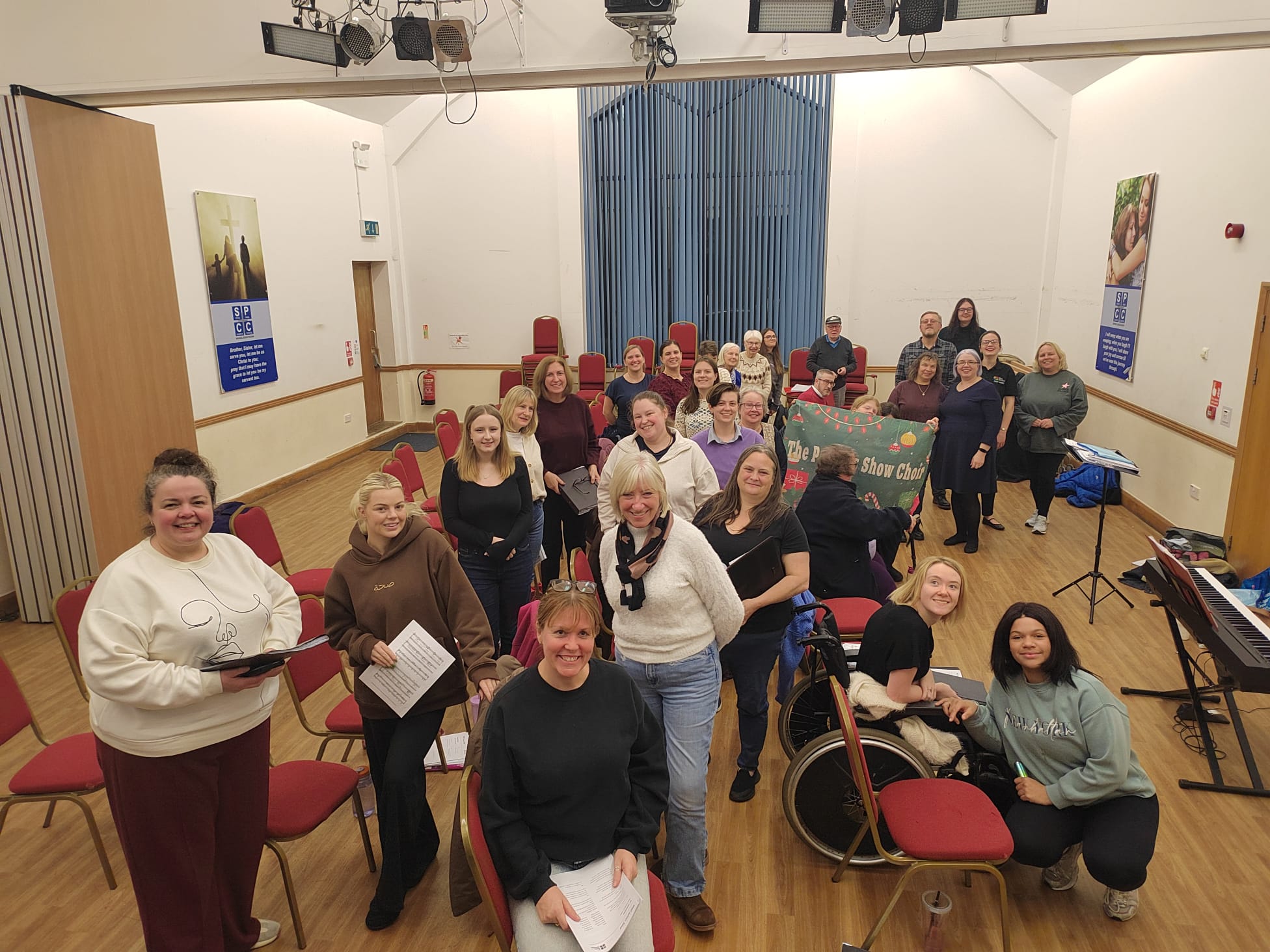
She parks as close to the hall door as the space allows, then sits for a moment before going in. If the chairs are in rows again, I’ll need the end one — no way to explain that without making a thing of it. Two people hold the door. Nobody looks at the stick. Someone she doesn’t know yet says “you found us then” like she’s already one of the regulars, and points her toward a chair at the end of a row that nobody has claimed. Nobody arranged that. Or maybe someone did, and just didn’t make it a conversation. Twenty minutes in, she’s sung the wrong note twice and nobody has turned round.
Context: Accessible Choirs Disability and Inclusion : Disabled People and Barriers to Arts Participation
Arts Council England’s equality and diversity literature review notes that disabled audiences’ engagement with arts and culture is shaped largely by practical barriers such as cost, transport, physical access, signage, staff attitudes, and accessible information formats. These barriers are often interlinked, with negative experiences creating a “vicious circle” that further suppresses demand and presence by disabled people at cultural events.[1]
A 2022 narrative review of cultural participation by disabled people echoes this picture, classifying barriers under five headings: lack of effective legislation and policy implementation, lack of funding and adequate services, negative attitudes, lack of accessibility, and lack of consultation with disabled people in cultural organisations. The review highlights that disabled people participate less both as audience and creators, and that arts engagement is frequently framed in medical or therapeutic terms rather than as legitimate artistic and social participation, which can itself undermine inclusion.[2]
In parallel, social prescribing schemes in the UK are increasingly used to link people with long-term conditions, disability, frailty, or mental health challenges to community-based services such as arts, singing, or social clubs, but recent evaluations warn of unequal access: patients in deprived areas are less likely to be offered social prescribing despite greater need. Disabled people therefore sit at the intersection of two patterns — systemic barriers to arts participation and uneven access to community-based health interventions.[4][5]
That intersection is exactly where the next section’s data sits — not as an abstract policy gap, but as a question of who actually turns up to a specific choir, on a specific Tuesday, and whether they keep coming back.
The People’s Orchestra Survey: Who Took Part?
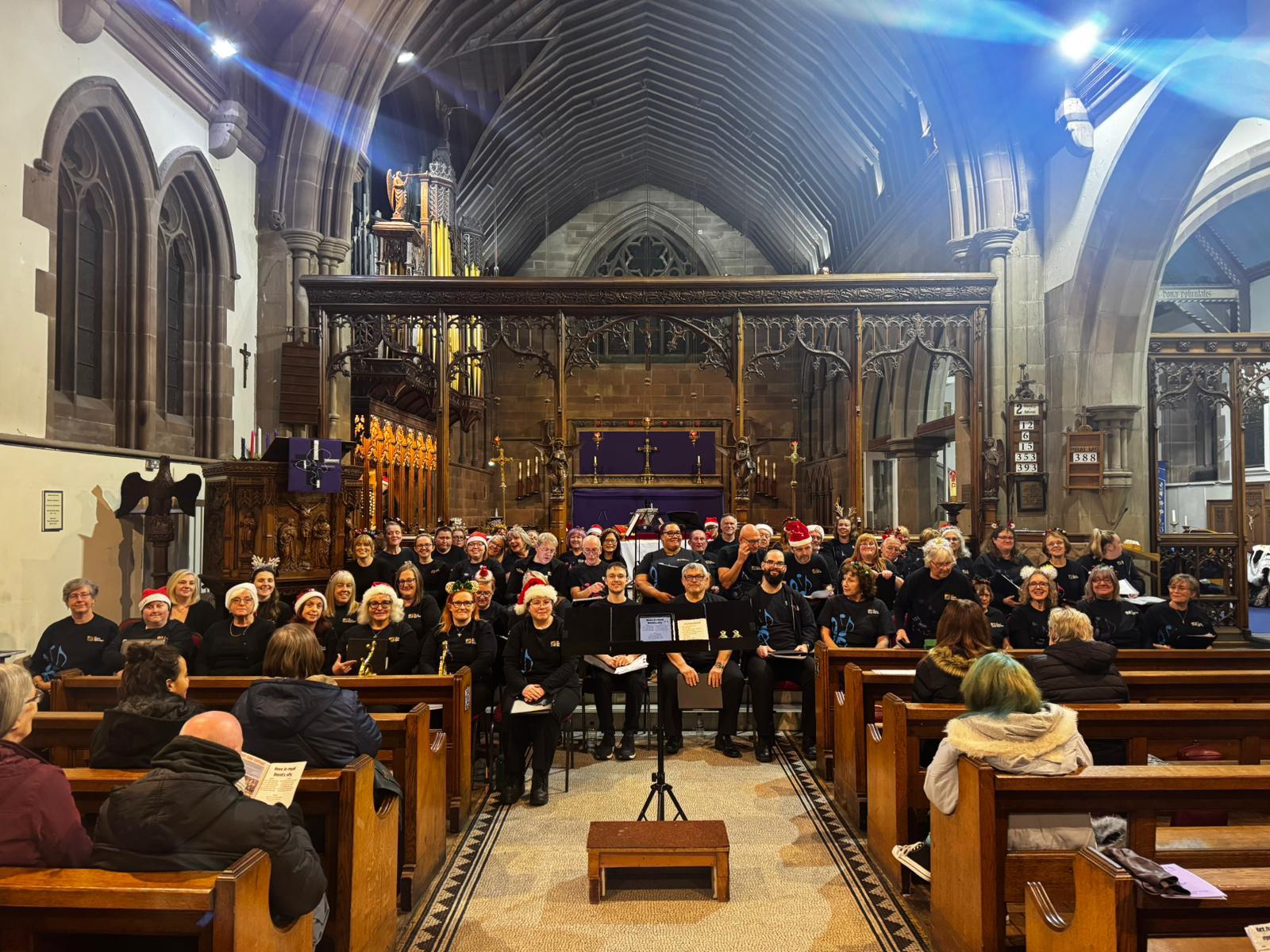
The People’s Orchestra conducted a member survey in 2026 across multiple choir branches, including Malvern, Sutton Coldfield, Shrewsbury, Cheltenham and others, receiving 152 responses. Age distribution skewed towards older adults: 72 respondents were 61–75, 55 were 41–60, 14 were 75+, 10 were 26–40, and one respondent was 18–25, indicating a strong presence of people in age groups where disability and long-term conditions are statistically more prevalent.[3]
Work status reflected this profile, with 72 retired respondents, 44 in full-time work and 24 part-time, and smaller numbers self-employed, not working, studying or in caring roles. This combination suggests the choirs function both as a post-retirement social space and as a wellbeing resource for people balancing work, health, and caring responsibilities.[3]
Disability Inclusion: 27% of Members Identify as Disabled or with Long-Term Conditions
Crucially for accessibility and inclusion, 41 of the 152 respondents (around 27%) answered “Yes” to the question “Do you identify as disabled or have a long-term health condition?”, with a further seven preferring not to say and five unsure. This proportion is notable when set against wider estimates: the 2021 Census recorded around 9.8 million disabled people in England, roughly 17.7% of the population, with prevalence rising sharply with age.[3][7]
Where many arts organisations report under-representation of disabled audiences and performers, this choir dataset shows disabled people and those with long-term health conditions not only present but forming a sizeable minority in the membership. For funders and social-prescribing partners, this is an important signal that the choir is not simply accessible in policy terms but actively used by people whom policy aims to reach.[1][3]
She didn’t answer that question on the survey to make a point. She answered it because it was there, and because for once, nobody was going to use the answer to decide whether she got to stay.
Belonging Outcomes for Disabled Members
Representation alone does not guarantee inclusion. The survey therefore asked about belonging: “Do you feel accepted and that you belong in your choir?” Respondents could select “Yes — I felt I belonged straight away,” “Mostly — it took a little time, but now I do,” or “Not yet — I am still finding my place.”[3]
Among all respondents, 86 said they felt they belonged straight away, 59 said belonging developed over time, and only seven said they were still finding their place. Looking specifically at the 41 respondents who identified as disabled or with a long-term health condition, 27 reported that they felt they belonged straight away, 11 said belonging developed over time, and only three said they were still finding their place.[3]
This pattern matters because it shows that disabled and long-term-condition members are not marginal in the social fabric of the choirs: their belonging outcomes match, and in some respects slightly exceed, those of the wider membership. This contrasts with much of the wider literature in which disabled people report lower rates of arts participation and describe feeling “uncomfortable or out of place” at cultural events due to physical, economic, and attitudinal barriers.[1][2][3]
Welcoming Atmosphere and Psychological Safety
The survey also asked “Did you feel welcome when you first joined?”, with response options ranging from “Yes – I felt welcome and comfortable” to “Not really – I found it hard at first.” Across the full sample, 125 respondents chose the most positive option (“felt welcome and comfortable”), 17 said they had some worries that faded, and only 10 said they found it hard at first.[3]
While this question was not disaggregated by disability status in the raw output, open-text responses from disabled and non-disabled members alike highlighted the absence of judgement and the friendliness of both staff and fellow choristers as key reasons they persisted. This aligns with arts-sector evidence that staff attitudes, signage and the handling of practical access issues are among the most significant deterrents or facilitators for disabled audiences — when staff and fellow participants treat disabled people as “normal” participants rather than as exceptions, barriers reduce dramatically.[1][2][3]
That “normal, not exceptional” quality is exactly what the composite scene above turns on: the door held without comment, the seat that no one made into a discussion. It is a small thing to design for and a hard thing to fake in a survey response.
Attendance, Enjoyment and Reliability of Access
For disabled people, reliable access can matter as much as one-off opportunities, particularly where transport, fatigue or health conditions make sporadic participation difficult. In the People’s Orchestra survey, 145 of 152 respondents said they attend rehearsals “almost every week,” and the enjoyment frequency question showed 118 saying they “always” enjoy rehearsals, 30 “often,” and only four “sometimes.”[1][2][3]
This combination — high disability representation, strong belonging outcomes and consistent weekly attendance — suggests that the choir model is not just accessible in theory but practically usable and emotionally rewarding for disabled members over time. From a social-prescribing perspective, this reliability is important: link workers need to know that recommended groups will provide ongoing structure and support, not time-limited programmes.[5][3]
Six months in, she stops calculating whether she’ll manage the whole rehearsal before she leaves the house. She just goes. That, more than any single week’s enjoyment score, is what “almost every week” is actually measuring.
Intersection with Social Prescribing for People with Long-Term Conditions
Social prescribing link workers are tasked with connecting people whose health is affected by factors such as loneliness, low mood, long-term conditions and disability to non-clinical community resources. NHS England guidance stresses that individuals living with multiple long-term conditions, disability or frailty, and those in ethnic minority communities, are bearing the brunt of widening health inequalities, and that social prescribing can demonstrate its value by linking these groups to coordinated, proactive community-based support.[6]
However, large-scale analyses of social prescribing rollout show that link-worker provision and referrals have often been greater in less deprived areas, raising concerns that access may be inversely related to need unless programmes actively target underserved communities. Within this context, a choir network that already includes a high proportion of disabled and long-term-condition members, with strong belonging outcomes, offers an attractive partnership opportunity: the infrastructure is demonstrably capable of supporting people who social prescribing is designed to reach.[4][5][3]
Case Study Highlights for Funders and Partners
Drawing the strands together, The People’s Orchestra’s survey provides several headline points that can be used in funding applications, partnership pitches, and SEO-optimised social impact pages:
- Around 27% of surveyed members identified as disabled or living with a long-term health condition, a proportion comparable to or higher than population estimates for disability and long-term illness in England.[3][7]
- Among disabled and long-term-condition members, two-thirds reported feeling they belonged straight away, with only a small minority still finding their place, indicating parity of belonging outcomes with the wider membership rather than marginalisation.[3]
- Weekly attendance rates above 95% across the sample show that the choirs are not just accessible once, but form part of disabled members’ ongoing routines, supporting the kind of regular engagement associated with better wellbeing in social-prescribing evaluations.[5][3]
- Open-text responses from disabled members include descriptions of feeling “accepted,” “normal” and able to contribute, directly countering common reports of feeling out of place in other arts spaces.[1][3]
- These points can be framed within recognised policy and research language about barriers and facilitators to cultural participation — demonstrating that the choirs actively counteract barriers identified in literature, such as negative attitudes, lack of accessibility and lack of consultation with disabled people.[1][2]
Implications for Practice and Future Development
The case study suggests several practical implications:
- Design and delivery practices that remove practical barriers (transport support, clear access information, staff training in disability awareness) are central to sustaining high disability participation and should be highlighted in any description of the programme for partners.[1]
- Co-production with disabled members (e.g., advisory roles, feedback loops on rehearsal venues, break-time structure, communication channels) aligns with recommendations that cultural organisations involve disabled people directly in decision-making to dismantle barriers.[2]
- Targeted outreach via social prescribing link workers in more deprived areas could help address national inequalities in access to social prescribing, using the choir’s strong inclusion record as evidence that referrals will lead to genuine participation rather than token offers — starting with link workers being able to find the nearest People’s Show Choir for a referral.[4][5]
- Public-facing impact storytelling — for example, accessibility pillar pages on the website and case-study videos — can make the choir more visible as an inclusive option both to disabled people and to professionals seeking suitable referrals, improving both SEO and partnership readiness.[1]
Limitations of the Case Study
The findings rely on self-reported disability and long-term condition status in a single 152-person survey, which may under- or over-estimate true prevalence due to interpretation of the question or social desirability bias. The survey did not disaggregate all questions by disability status, limiting the ability to compare certain outcomes in detail, and it focuses on existing members rather than those who considered joining but were deterred, so it cannot describe barriers that still prevent some disabled people from accessing the choirs.[2][3]
Despite these limitations, the combination of relatively high disability representation, strong belonging outcomes, and consistent attendance offers a robust, evidence-led narrative that The People’s Orchestra’s choirs are not only welcoming in intent but inclusive in practice — a narrative directly relevant to funders, commissioners, social-prescribing partners and disabled people seeking genuinely accessible community music opportunities. Funders, commissioners or link workers wanting the underlying data or a conversation about partnership can get in touch directly.[1][3]
Questions answered by this article
How accessible are The People’s Orchestra’s community choirs for disabled people?
In the 2026 member survey, 27% of respondents (41 of 152) identified as disabled or living with a long-term health condition — comparable to or higher than population estimates for England. Their belonging outcomes matched the wider membership (27 of 41 felt they belonged “straight away”), and 95% of the full sample attend rehearsals almost every week, indicating the choirs are usable in practice, not just accessible in policy.
What is social prescribing, and how does it relate to community choirs?
Social prescribing connects people whose health is affected by loneliness, long-term conditions, disability or low mood to non-clinical community resources such as choirs, exercise groups or social clubs, via NHS link workers. Evaluations have found link-worker provision is often greater in less deprived areas, so community groups with a strong existing track record of including disabled and long-term-condition members — like The People’s Orchestra’s choirs — offer social prescribing partners a lower-risk referral option in underserved areas.
Do disabled members feel they genuinely belong, or are they just present?
The survey suggests genuine belonging, not just attendance. Among the 41 disabled or long-term-condition respondents, two-thirds said they belonged “straight away” and only three were still finding their place — figures that closely track the wider membership. Open-text responses describe feeling “accepted,” “normal” and able to contribute, which directly counters the “uncomfortable or out of place” experience often reported in wider arts-participation research.
Reference List
- Equality and diversity within the arts and cultural sector in England — Arts Council England. Documents disabled audiences’ engagement being shaped by cost, transport, physical access, signage and staff attitudes, and describes a “vicious circle” in which negative experiences of these practical issues further depress demand.
- Barriers and Facilitators to Cultural Participation by People with Disabilities — Leahy, A. & Ferri, D., Scandinavian Journal of Disability Research, published 28 February 2022. Narrative review classifying barriers under five headings (legislation/policy, funding/services, negative attitudes, accessibility, lack of consultation); finds disabled people participate less as both audience and creators, and that arts engagement is often framed in medical/therapeutic rather than artistic terms.
- The People’s Orchestra’s 2026 Choir Member Survey (152 respondents, spanning Malvern, Sutton Coldfield, Shrewsbury, Cheltenham and other branches) — first-party, unpublished data. Attach the internal survey report or data file when publishing or sharing with partners, as this is proprietary data with no stable public URL.
- Study warns unequal access to NHS social prescribing could reinforce inequalities — University of Manchester, published 9 June 2026, reporting on research published in PLOS One (DOI: 10.1371/journal.pone.0350842). Found patients in England’s most deprived communities were significantly less likely to be offered social prescribing than those in less deprived areas, despite greater need; only 4% of patients in the dataset were offered social prescribing between 2019 and 2024.
- Inequality in the impact of the national social prescribing on population outcomes — Agboraw, E. et al., British Journal of General Practice, 2025, 75(suppl_1), bjgp25X741609. Finds link-worker recruitment is inversely related to need by rurality and deprivation, with a concentration index showing link workers concentrated in the least deprived areas.
- Social prescribing as a way of tackling health inequalities in all health settings — Dr Jagan John, NHS England blog. States that individuals living with multiple long-term conditions, disability, frailty, or in ethnic minority communities, are bearing the brunt of the widening gap in health inequalities, and describes social prescribing link workers’ role in connecting them to coordinated community-based support.
- Disability, England and Wales: Census 2021 — Office for National Statistics, published 19 January 2023. Records approximately 9.8 million disabled people in England in 2021 (17.7% of the population), with prevalence rising with age.