
The People's Orchestra and Show Choir Podcast · Season 1, Episode 6
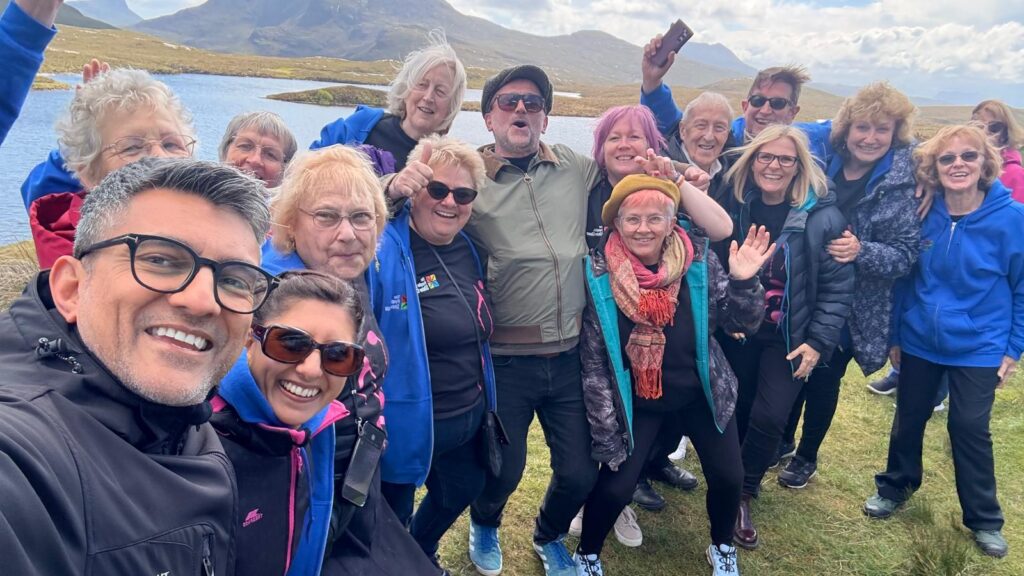
The People's Orchestra and The People's Show Choir Podcast, July 2025: The Scottish Highlands Tour
Released 30 June 2025 · 33 minutes · Hosted by Matt Ward
Prefer to listen? Play the audio here, or listen on Acast.
🎵 Chapters
Jump straight to the part you want. Click any timestamp to play the video from that point.
🎧 About this episode
Chris Weber goes behind the scenes of planning our Scottish Highlands tour, and librarian Matthew Whitehouse explains what it takes to get music to over 1,000 members, with music from the tour and our first Little Notes from the Heart.
Episode details
- Released
- 30 June 2025
- Length
- 33 minutes
- Host
- Matt Ward
- Series
- The People's Orchestra and Show Choir Podcast
Questions answered in this episode
❤️ Get involved
Try The People's Show Choirs, The People's Orchestra or the Big Band – your first two sessions are free. Every membership funds our work supporting people into employment and through financial crisis.
Full transcript
This transcript was made from the episode’s captions and lightly edited for readability. Click any timestamp to play the video from that point.
Intro with presenter Matt Ward (0:00)
[Theme song]
0:04 Matt Ward: Hi, I’m Matt Ward, and this is The People’s Orchestra and Show Choir Podcast. As usual, we’ll be informing you about what’s happening now, and looking ahead to what’s coming up for The People’s Orchestra and The People’s Show Choir. In this episode we have two in-depth interviews for you. I spoke with Chris Weber as he was about to set off on the Scottish Highlands tour, to share how the planning all went. And Matthew Whitehouse gave us a look at what really goes into being our librarian, and how his role is not only about getting sheet music out to over 1,000 members. All of that to come, after a little taste of some of the music from the Scottish Highlands tour.
Music from the Highlands tour (0:50)
[Music: “I See the Light”, performed by The People’s Show Choir on the Scottish Highlands tour]
[Music: The Phantom of the Opera into a Madonna medley]
[Applause]
4:30 Matt: Absolutely brilliant. Now, before we get into the interview with Chris, let’s hear from him for our regular feature, the Musical Word of the Month.
Musical Word of the Month: scherzando (4:36)
4:46 Chris Weber: The word of the month is scherzando. It is a word that means to perform playfully, or to play in a joking, light-hearted or happy manner. It is used as a direction in music to indicate style and tempo simultaneously. A scherzando can also refer to a musical composition with a playful, childlike character.
[Music]
Chris Weber: behind the scenes on the Highlands tour (5:13)
5:13 Matt: And as I said, Chris is staying with us now – I spoke to him back in May about prepping for the Scottish Highlands tour. From the early planning stages to that final performance, he’s here to take us behind the scenes of one of our most ambitious musical adventures. So, Chris – hi!
5:30 Chris: Hi, Matt – how are you?
5:32 Matt: Yeah, good, thanks. So how did the idea for the Scottish Highlands tour come about?
5:36 Chris: As you remember, last year we did a tour to Poland, and we were originally going to go to Barcelona this summer – that was the original plan. But because of all the troubles over there, with locals not liking tourists coming over, we were looking for somewhere else to go. And we’d set up the Black Isle Choir, which is up near Inverness. We were also quite conscious that, because they’re so far away from us – we’re quite Midlands-centric as an organisation – we wanted to do something where we could include them, go and be with them, and share an experience with them, to really make them feel part of the TPO family. So that’s where the idea came from: rather than going abroad, just to go up north.
6:29 Matt: So it’s a bit like the Scots playing on home ground, then.
6:32 Chris: Yeah, just like that.
6:34 Matt: So how did it feel seeing everybody come together for that huge rehearsal in Chamberlain Square?
6:38 Chris: Brilliant – absolutely brilliant. We did the same thing last year before the Poland tour, so we knew it was going to work. It was obviously weather-dependent, and thankfully it didn’t rain, although it was quite chilly for May. We didn’t have everybody there, because our Shrewsbury choir were doing their own local performance at the same time, so we were probably missing about 20 people. But nevertheless it was absolutely fantastic. And it’s really important, because it’s the first time we put everything together. When we prepare for the tour, we don’t ask choir leaders to give up any of their weekly rehearsal time to prepare this stuff. So the choir members are given the resources and asked to learn it themselves – and the orchestra and the band too – and it’s the first time that it all comes together. There’s always a bit of anxiety at the beginning, because you think, “how is this going to sound, with everybody never having rehearsed together before?” But, as it turns out, every single time, there’s never any need for anxiety, because they’re good musicians, they’re great people, and it all just always comes together.
8:00 Matt: Cool. So in the planning, were there any unexpected moments, things that didn’t go quite to plan, or surprise highlights?
8:05 Chris: Yes – there are always things that don’t go to plan. This time it was a little bit more complex because, unlike last year, we’ve included the orchestra. The orchestra coming along has inevitably meant some different challenges. We’ve had to organise different types of performances while we were up there. But also, producing all the orchestral music – it needed arranging. I believe you’ve got Matthew on later in this episode, and he’s been the one who’s had to arrange all the orchestral music, which has been a real challenge, because it’s only part of the orchestra. There are about 15 musicians going, and that means the music has to be completely rearranged to work for that selection of instruments, rather than the whole orchestra, and to fit in around what the choir and the band are doing. So that’s been quite a challenge. And then the biggest challenge on the actual day at Chamberlain Square was that we were right next door to the Britain First demonstration that was happening in Birmingham at the same time – so we had to be louder than them!
9:20 Matt: Oh, OK! Yeah, you’re right – we’ve got Matthew on later, so I will be asking him about that. And great that the orchestra are part of this as well. Obviously you’ve done the concerts with them at Symphony Hall and all of those, and you’ve taken groups on tour before, as you mentioned. How do you expect this one to compare to previous tours?
9:45 Chris: All the previous tours we’ve done have been choir-only. That includes the mini-tours we did last summer to different towns within the UK, and obviously the Poland tour. The Poland tour was very different – everyone had to make their own way there, so everyone organised their own flights, etc. But this is all done together, on one coach journey. So we are literally in each other’s pockets 24/7 – 10 hours on a coach there, 10 hours on a coach back. Our two days up there are absolutely packed, and we’re all in the hotels together. So it’s going to be literally like being in the Big Brother house, all together, with 106 of us for four days! And again, because the orchestra’s with us this time round, the whole dynamic will be very different.
10:45 Last year, all our performances were in outdoor spaces, where it didn’t really matter how many people came to watch. This time round, we’re doing a really big concert in Inverness Cathedral, and we’ve been selling tickets. So we were always conscious about whether we’d be playing to an audience or not – as soon as you’re doing something with tickets, there’s always that element of the unknown, and nobody wants to perform to five people! As it turns out, we’ve sold 200 tickets, so the audience will be amazing, and we’re really looking forward to that concert. And then the two potential outdoor concert performances in Ullapool the following day may be indoors as well, depending on the weather – you never know what the Scottish Highland weather’s going to throw at you – but we are prepared. Like I say, because of the orchestra, we’ve had to make sure we’ve had contingency plans. It’s very easy if you’re in a choir standing outside: it starts raining, everyone just runs for cover. But when you’ve got an orchestra, with a cello and a tuba and big instruments, all running for cover – it doesn’t work the same. So you have to plan.
12:05 Matt: It’s Scotland as well! I imagine it being like that scene in The Living Daylights, where they’re sliding down the hill in the cello case.
12:12 Chris: Oh, we could recreate that! Exactly. So the challenges have been very different, but just as exciting.
12:20 Matt: So what do you really hope the members are going to get from this tour?
12:25 Chris: I think if I was to hope for one thing, it would be what they experienced last year: the joy, the camaraderie, and the closeness of being in that musical family together. When I’ve been talking to people who say, “well, I don’t know if a tour is for me or not”, I’ve always tried to tell them that things like the tours are so different to the weekly rehearsals. There’s a level of bonding – that’s the best word for it – that happens. It’s the same with mass events, and it’s the same with these tours: a level of bonding that you just don’t get in a weekly rehearsal, because of the sheer amount of time you’re spending together, the fact that you’re meeting new people, different people from different choirs and different orchestras. The whole essence of that is absolutely magical, and until you experience it, genuinely, no words can really describe it. That’s what I hope every member will feel at the end of this tour.
13:45 Matt: Well, it’s working on me – I’m getting FOMO just from you talking about it! So, presumably you’re making a profit from this tour, which will go towards the charitable work done by the organisation?
14:00 Chris: No, no – not at all. There’s no profit whatsoever. The cost of this tour has literally just covered the costs for the members: the coaches, the hotels, the day trips, etc. There’s absolutely zero profit being made from this.
14:15 Matt: So apart from the bonding and everything, what are you hoping to get out of it?
14:20 Chris: What we would like to do as an organisation is leave a legacy, which will then put us in good stead for the future in those areas. The musical footprint that we leave in Inverness – we hope that, of the 200 people who come to see us in the concert, some will choose to join the choir in the Black Isle that’s already there. And we’ve got plans to set up another choir at some point in the near future up in the Highlands as well. So the idea is to leave a legacy that people remember us by, so that there’s that link when we do something up there, which will attract new people to us – new members – which then brings the extra money that feeds our charitable work.
15:20 Matt: Oh, that’s really interesting – it sounds like you’re laying groundwork for the future, then.
15:25 Chris: Yes, absolutely.
15:27 Matt: Thanks, Chris – thanks for explaining all of this to us. I really wish I could be there. And while we’re all having a lot of fun making music together, there’s also a serious side to what we do as a charity. If you’re able to support us, even with a small donation, it makes a big difference. Just head to thepeoplesorchestra.com, click the Donate button at the top of the page, and give what you can. We’re incredibly grateful for your support.
[Music]
TPO librarian Matthew Whitehouse (16:06)
16:06 Matt: Now, Matthew Whitehouse is the person who makes sure our singers and players always have the music they need – no easy task when you’re supporting over 1,000 members across the country. As our resident librarian and one of our key arrangers, he’s here to tell us what really goes into the role, how he keeps everything running behind the scenes, and why his job is just as much about people as it is about paper. Hi, Matthew!
16:30 Matthew Whitehouse: Hello – how are you?
16:32 Matt: Yeah, very good, thank you. Let’s start with the basics: what does a music librarian actually do?
16:38 Matthew: Well, besides sorting out the music, there’s a lot more that goes into it than you’d think. You have arranging music, which you don’t really expect from a music librarian, but it’s very much intertwined into the whole job. A lot of printing, as you might imagine. And then you have the usual duties of maintaining an archive – making sure everything’s catalogued and organised, ready for when we need the music to be sent out to our choirs and orchestras.
17:13 Matt: So, as you said, you’re also responsible for a lot of the musical arrangements we use. How did that become part of your role?
17:20 Matthew: I’ve always loved composing, but before I went into this job, I’d never attempted arranging for orchestra – and, more importantly, choir. That was definitely uncharted territory for me that I had to explore. I first came into the company through the Kickstart programme, and my main role was to do arranging for the orchestra. So that’s how it all started, really. And then, once my time with Kickstart had ended, I came back to take on the librarian role. Since I had that experience before coming into the librarian role, I was versatile enough not only to sort out the music, but also to take on arrangements, or add parts here and there, or adjust things – to give the charity, and my role, a more stable and versatile footing. Instead of asking external freelancers, I could take some of the weight off – and I love doing it anyway. It’s not just a side thing that I do; I view them both equally as enjoyable, and as much part of the job as each other.
18:35 Matt: Oh, that’s great – it sounds like you really love it. So when you’re arranging for our choirs and orchestra, you’re not working with a typical set-up. We’ve got amateur singers, we’ve got Rusties players, and a very mixed set of instruments. How do you even begin to write or arrange with that in mind?
18:55 Matthew: I think a lot of it comes from the advice of Amy, our orchestra manager, who can advise on the playing ability – and the singing ability is more to do with my colleague Chris and the other choir leaders, who can give insights into what might be a challenge for the singers, or might be too easy. So they can influence me and advise on how to arrange music in a way that suits them best. A lot of it is also trial and error. We take new arrangements to the orchestra rehearsals, and sometimes it doesn’t quite work, and things have to be adjusted, or scrapped and then reformed again. So it’s a mixture of everything, really – a collaboration from everyone, so that we all work together to produce the best arrangements and music for our members.
20:04 Matt: It sounds like there’s been a lot of learning along the way to get to where you are now.
20:08 Matthew: It is quite literally a learning curve, and it doesn’t always go right from the get-go. But I think that’s part of the process, and it helps us get better at understanding our members and their playing ability. “Learning curve” is definitely the right word to use.
20:30 Matt: That’s great. We know that you also take care to make the music as accessible as possible – like offering alternative formats, or printed colours to support individual needs. Can you talk a bit about how inclusivity factors into your work?
20:45 Matthew: Yes. Some members of both the choir and the orchestra have different requirements, so we offer music printed on different colours for visual needs. The same goes for lyric sheets – what we offer can be printed in large text, or again on different coloured paper. Going back to the lyric sheets, we offer those for people who might not feel comfortable, or feel intimidated, reading a score. Some of our members aren’t musically trained, so they don’t know how to read music, and that might be intimidating for them. So, to make it more accessible and inclusive for everyone, breaking it down on a lyric sheet gives them the opportunity to be part of the choir or ensemble without feeling as if they’re lesser than someone who might have a bit more music knowledge than they do.
22:01 Matt: And do you ever find yourself writing around what isn’t there, in terms of instrumentation – adjusting parts on the fly depending on who turns up, or which sections are a bit light? I envision flute players playing one note at a time while the fiddlers’ elbows are going up and down, doing overtime!
22:20 Matthew: Yeah – it’s a whirlwind of different sounds and different actions coming out of the orchestra! Everyone’s doing something different. In terms of adjusting parts – part of our offer is the Rusties ensembles. These ensembles are for people who have just picked up an instrument, or aren’t at a standard where they could join an orchestra, so it gives them the opportunity to play without judgement or pressure to perform at a high standard. And we have people in those groups who need parts to be adjusted – or, in some cases, extended. Their confidence has grown so much in that ensemble over the time they’ve been there that they feel they want to do more than the parts they’re given. So, going back to one of your earlier questions, it’s all about learning about the members, their playing styles and abilities, and making music – even if it means going back to the drawing board and writing a part in Sibelius or MuseScore that they really enjoy playing and feel comfortable playing. It all depends on what they need.
23:25 And going back to the part where you said about changing parts of the orchestra if they’re a bit light, or if something else needs to happen: we’ve been experimenting with giving the flautists the violin parts, so we can add a different colour. It also gives them the opportunity to play something different within the orchestra, instead of just their flute parts. So we’re always experimenting with what we can do and how we can change things up.
24:05 Matt: You must have a pretty unique sound as an orchestra, then. And I love the Rusties Orchestra idea – in fact, we’ve got to get Julian Powell back to talk about that, because we promised we would! So what’s the most surprising or unexpected part of your job – something people probably don’t realise goes on behind the scenes?
24:30 Matthew: I think for me it’s probably when we’re running up to a concert. Things get very hectic. Everyone’s running around like headless chickens, trying to get everything in place and make sure everything’s ready for the day, and you get people missing music. A lot of equipment has to be accounted for – packing the van, and putting the timpani in, which is a four-man job, because they weigh a ton! At our Christmas concert last year, we were given some tubular bells to use, and they were so incredibly heavy – I think we had six people lifting these massive tubular bells into the van. So it’s weird things like that, which I think people who attend the concerts, and who perform in them, don’t really think about. There’s a lot of running around trying to get it all together – but it’s also quite enjoyable, despite the stress.
25:44 Matt: Presumably you’ve got a whole band of volunteers who help you out with that kind of stuff – which is brilliant; the team spirit behind this… And finally, what would you say to someone listening who’s a bit of an organiser at heart, and might be interested in volunteering?
26:00 Matthew: Well, we actually do have quite a lot of volunteers who come into the office. With the number of choir members we have – recently we exceeded a thousand – it’s such a massive number of people that, especially within my job, printing and preparing that much music is such a time-consuming task that it’s come to the point where I can’t really do it alone now. So we’ve had some members of the choir come in from the morning till the afternoon to help staple and prepare the music. And I think it’s such a good time for them to come along, because they can have a chat, get to know people in the office, and they’re provided with tea and biscuits – so if that doesn’t persuade them, I don’t know what will!
26:45 Matt: Of course – I had a chat with Sandra in one of the episodes, and she was part of the Staple Squad, and she really enjoyed her time doing that.
26:52 Matthew: Yeah, there are definitely some regulars who come, and we always look forward to them coming to help. It also gives them the opportunity to have a little sneak peek at the music that’s coming – but we do have to tell them to keep it to themselves!
27:15 Matt: Perfect. Well, look – thanks, Matthew, for telling us all about your role. As Matthew’s shown, so much of what we do happens behind the scenes, and it wouldn’t be possible without the people who are willing to lend a hand. We’ve got lots of volunteers, but we always need more. So if you’re somebody who loves organising and planning, or just being part of a supportive team, we’d love to hear from you. Head to thepeoplesorchestra.com, or drop us an email at hello@thepeoplesorchestra.com, and find out how you can get involved as a volunteer.
Little Notes from the Heart (28:00)
28:00 Matt: Before we sign off: we had a fantastic response last episode to our request for messages about how you benefit from being a member of The People’s Orchestra. So we’re going to play some more of those now, and this will be a new regular feature that we’re calling Little Notes from the Heart.
[Jingle: “Little notes from the heart”]
28:27 Jean Jones: Hello, my name is Jean Jones, and I belong to the Shrewsbury branch of the choir. What do I get out of it? My word, I can’t even begin to tell you. I was very, very depressed after a family bereavement, and one of the other members, who is a relative of mine, invited me to come along. It’s the best thing I ever did, because I’m so happy coming here on a Tuesday evening. I haven’t been on stage yet, but I’m going to pluck up the courage, and I’m going to do that as soon as possible. I thank everybody here, because they’ve been absolutely amazing in welcoming me. Thank you very much.
29:04 Joanne: Hi, this is Joanne from Shrewsbury Choir. I just wanted to say how much I love being part of The People’s Show Choir, and what a massive impact it has had on my mental health. It’s been a real struggle in the last 12 months, but being able to come to choir and be among people who lift you up and help you get through things is so empowering.
29:32 “I started coming to the choir to help my stepson with his confidence. However, they’ve become like a family to me. I have two disabled children and a disabled husband, so I wasn’t getting out – I didn’t do anything for myself. And I absolutely love it there. They make me feel welcome, they’re always there if you need a hand, and it’s changed the way I feel about me. I’m able to be me there, and just have fun, and sing, and do something I love. So thank you.”
30:03 “I would just like to thank you, and let you know how beneficial joining your choir has been to me. My experience of becoming a choir member has been a wonderful healing process. I was widowed almost 12 months ago to the date – not a unique experience, but an awful one, for which nothing can truly prepare you. Two of your existing choir members knew my husband and suggested I join you. The welcome I received was kind and genuinely thoughtful. That was six months ago, and I haven’t regretted it once. I’ve made friends, and my confidence is slowly improving. I’m not a wonderful singer, nor do I read music, but I’m learning and laughing in the process. It’s no longer daunting, and I really enjoy myself. Thank you so much.”
[Jingle: “Little notes from the heart”]
31:05 Matt: How wonderfully heart-warming. If you would like to share your own Little Notes from the Heart, please record a WhatsApp voice note on the number 07786 629 531 and we will include it in the next episode.
[Music]
What's happening in July (31:26)
31:26 Matt: Coming up in July: our Shrewsbury and Wolverhampton choirs are starting our concert season off with a wonderful concert on Saturday the 28th of June. And with only a handful of rehearsals left until their local summer concerts, the rest of our choirs are working intensely to get their exciting repertoires ready to be performed. If you would like to attend one of our summer concerts, simply go online to eventbrite.co.uk and search for The People’s Show Choir to see when and where they’re all happening.
31:53 And it’s not just the choirs that are busy getting ready for a packed schedule of summer fun. Our orchestral ensembles have also got a number of really exciting events coming up, including Comic-Con on Saturday the 12th of July, and The People’s Orchestra’s Summer Jam Under the Sky in Cannon Hill Park on Sunday the 27th of July. Fancy coming to watch? Go to Eventbrite and search for The People’s Orchestra for further details. And if you’ve ever thought about joining us, now’s the perfect time. Head to thepeoplesorchestra.com to find out how to sign up for two weeks free for The People’s Orchestra, one of our 20 show choirs, four Rusty Players Orchestras, or the Big Band.
32:30 Thank you for listening to this episode of The People’s Orchestra and Show Choir Podcast. Visit our website, thepeoplesorchestra.com, and follow The People’s Orchestra and The People’s Show Choir social media channels. And if you’d like to find out more about how I can help you with making a podcast for your organisation, take a look at my website, audioeditingsecrets.com, and follow my social media, which is @audioeditingsecrets, on Facebook, Instagram, YouTube and TikTok. I’ve been Matt Ward – thank you for listening.
[Music]
Previous episode · Season 1, Episode 5
May 2025: Our 13th Anniversary Episode
In this anniversary episode, host Matt Ward looks back at our Mother's Day concert at Birmingham Symphony Hall, and hears from choir leader and multi-instrumentalist Liz Read, office team member Paige Leung, who organised the day for 600 performers, and CEO Sarah Marshall, as The People's Orchestra turns 13 and passes 1,000 members.
Next episode · Season 1, Episode 7
August 2025: Walking Choirs, Rusties and Wolverhampton
Chris Weber joins Matt Ward as co-host.