2018 Commonwealth Games Handover
The Work: One take, two continents — how The People’s Orchestra helped Birmingham steal the 2018 Commonwealth Games handover
There are big televised moments that look effortless — and then there are the ones where you can feel the risk underneath the polish. The Gold Coast 2018 Commonwealth Games closing ceremony handover to Birmingham falls firmly into the second camp: a cultural relay across two continents, performed live, on a fixed broadcast clock, with no second chances.
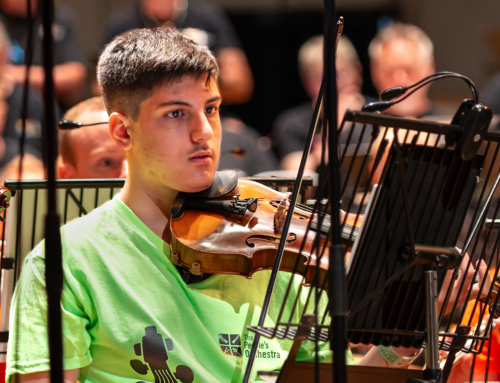
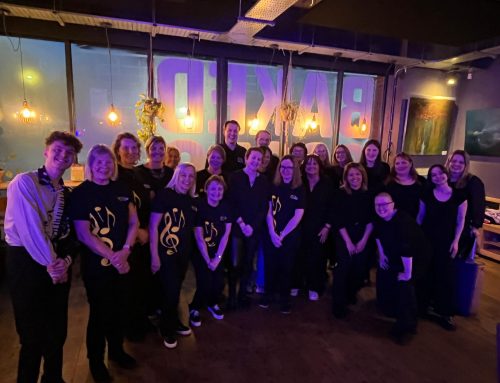
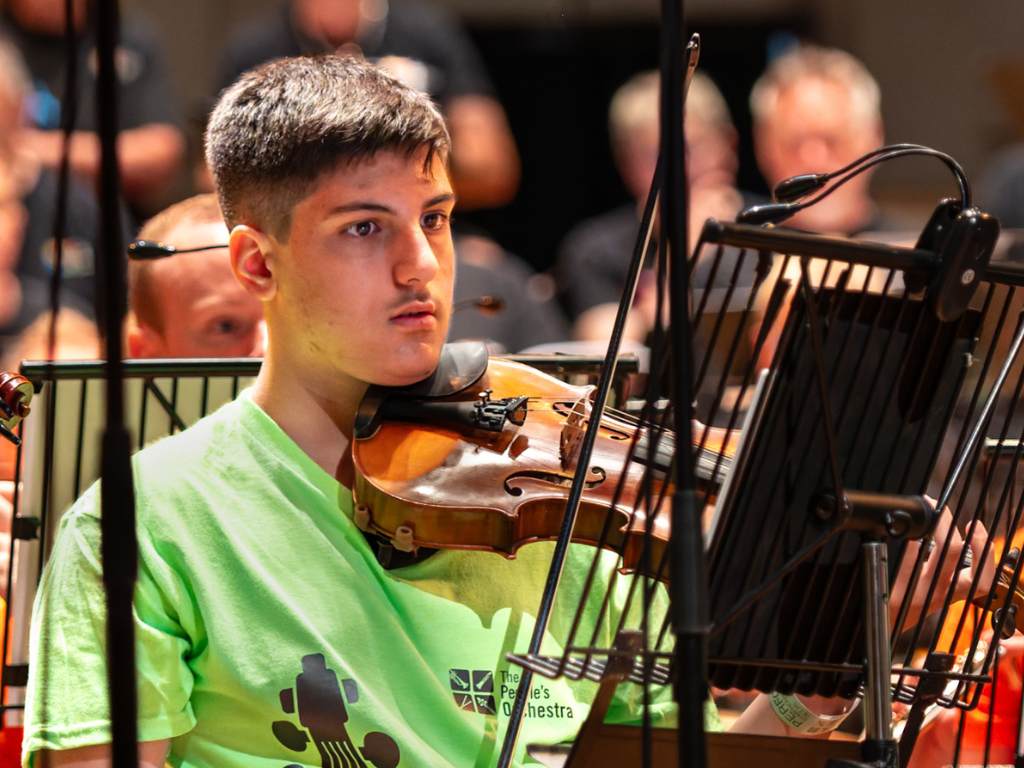
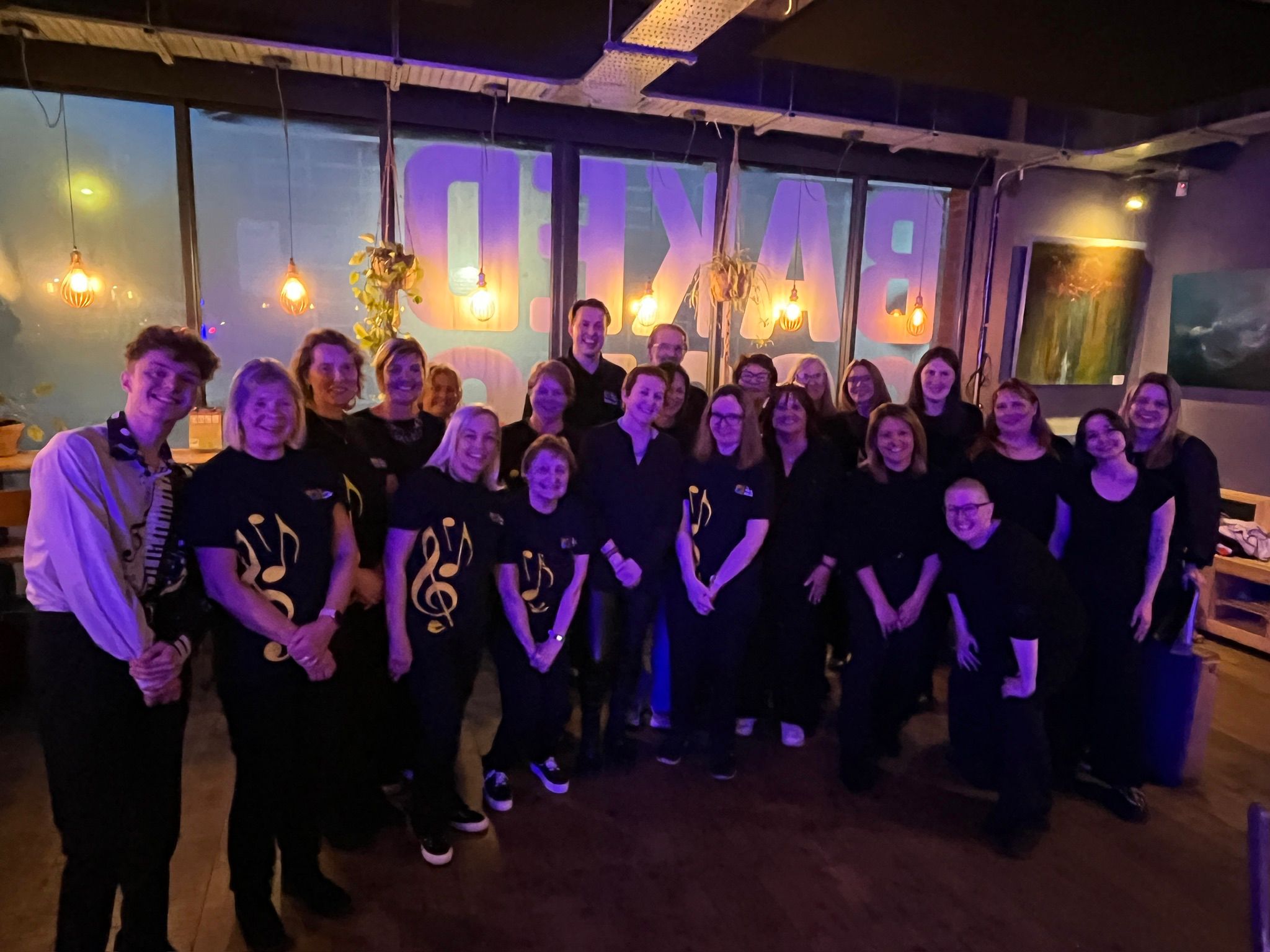
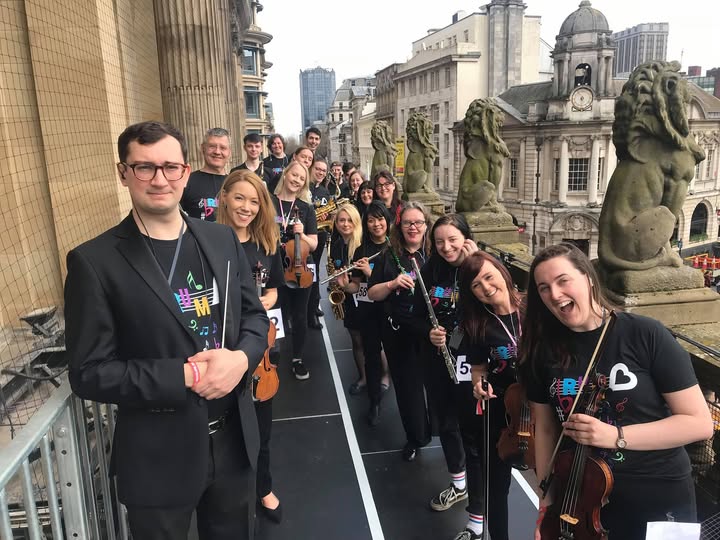
And right at the centre of Birmingham’s “we’re ready” message — under the bright optimism of ELO’s “Mr Blue Sky” — sat a detail that mattered more than most viewers would realise: The People’s Orchestra, a community-rooted charity ensemble, featured in a global showcase designed to present Birmingham as young, diverse, energetic, and proud of its own talent.
This is the behind-the-scenes story of how that moment was built — and why it still works as a masterclass in place storytelling today.
The brief: “Show the world Birmingham — but make it feel like Birmingham”
The 2018 Commonwealth Games handover took place on 15 April 2018 during the Games closing ceremony, when the Commonwealth Games flag passed from the Gold Coast to Birmingham.
Birmingham’s segment carried an explicit intention: not just “see you in 2022”, but here’s what kind of city we are. One local report captured it plainly: the performance was aiming to tell “the story of a city that is young, diverse and full of talent.”
The clever part wasn’t simply that Birmingham showcased artists. It’s who they chose and how they staged it:
-
Lady Sanity performing “Go The Distance” live in the stadium on the Gold Coast.
-
Amerah Saleh delivering a commissioned spoken-word piece, “Tourist in My City”, bringing an authored voice to the city’s identity.
-
Daniel Alexander’s film “We’re From Birmingham” — a fast-cut love letter to place and people.
-
Rosie Kay choreographing a mass participation sequence in Birmingham city centre.
-
And crucially: The People’s Orchestra embedded within the live Victoria Square performance set to “Mr Blue Sky”.
This wasn’t culture as decoration. It was culture as proof.
The constraint that forced brilliance: four weeks (and no time for “nice ideas”)
According to a Local Government Association case study written from the council communications perspective, Birmingham and partners were working with just four weeks’ notice to deliver the handover and the associated “homecoming” activity.
That kind of timeline kills anything that relies on endless approvals, star casting, or complicated staging changes. What it does reward is a sharp creative decision and relentless execution.
They doubled down on three high-impact choices:
-
Youth + diversity as the cast, not the slogan.
-
A locally iconic soundtrack (ELO) that instantly reads “Birmingham” without explanation.
-
A one-take live sequence, because nothing says “confident host city” like nailing something that’s hard to nail.
The LGA account also notes the technical accomplishment was later recognised through a Royal Television Society Awards nomination for the technical work behind the performance — which gives you a sense of how ambitious the filming was.
The “how did they do that?” centrepiece: one continuous shot through Victoria Square
Here’s what viewers saw: a joyous, kinetic “Mr Blue Sky” finale that travels across Victoria Square and ends on an aerial sense of arrival — Birmingham “welcoming the world.”
Here’s what the production had to solve in reality:
-
Live broadcast timing (your slot is your slot — no overruns).
-
Choreography for a large cast in a public square.
-
Camera movement with no cuts — the camera can’t “hide” mistakes.
-
Cueing music and action so it reads as seamless, not like a rehearsal.
-
Safety and crowd management, because you’re staging in an open civic space.
Birmingham City University’s Royal Birmingham Conservatoire staff describe intensive rehearsals at Edgbaston Cricket Ground, where performers learned the routine under Rosie Kay’s direction.
That line is easy to skim past — but it’s the giveaway: when you rehearse at a venue like Edgbaston, you’re dealing with scale, spacing, and logistics. You’re not casually “putting on a dance”. You’re building a live broadcast machine.
The hidden craft: props, parkour, and a 2.5-metre shuttlecock
If you want to understand what makes a sequence like this pop on screen, look at the scenic and physical storytelling layered into the action.
Stage One (a specialist scenic company) describes responding to an “extremely tight deadline” and creating oversized sport-themed props for the handover — including a 2.5m-high replica shuttlecock (with a concealed performer), inflatable sports elements, and transforming the square’s stone spheres into oversized sports balls.
These details matter because they do three things at once:
-
Instantly signal “Commonwealth sport” without a single caption.
-
Create readable shapes for TV (big, bold, unmistakable on a wide shot).
-
Give performers business — movement with purpose reads better than “people dancing”.
In other words: the props weren’t garnish. They were narrative shortcuts.
Why The People’s Orchestra’s presence hit harder than most people noticed
In the BCU account of the handover, The People’s Orchestra appears in a single line — but it’s a loaded one: the show “featured Birmingham Royal Ballet… and the People’s Orchestra” within the Mr Blue Sky performance.
Here’s why that matters, beyond the credit:
1) Orchestral sound is emotional architecture
You can choreograph energy, but orchestral texture gives a moment lift, scale, and a sense of occasion. It’s the difference between “a performance” and “a statement”.
2) It quietly reframes “who culture is for”
Featuring a community-based charity orchestra in a global handover helps land an unspoken message: Birmingham’s culture isn’t locked behind velvet ropes — it’s something people do, together.
3) It’s social proof at the highest level
A world-stage broadcast implicitly says: this organisation belongs in the story of the city. That’s reputation-building you can’t buy with ads.
And if you’re building participation arts in the West Midlands, that signal has downstream effects: on recruitment, partnerships, funding confidence, and the general public’s willingness to believe “I could be part of something like that.”
The supporting cast of the city: spoken word, film, and a track built for the moment
Part of what made the handover feel modern was the blend of forms — music, dance, spoken word, film — each delivering a different layer of meaning.
BCU’s breakdown adds useful colour:
-
Pre-recorded segments were filmed at BCU’s Curzon Street Studios, including Europe’s largest static green screen.
-
Daniel Alexander’s film “We’re From Birmingham” focused on communities, youth culture, and the “energy that buzzes throughout the city and region”, set to “Birmingham (Anthem)” by Lotto Boyzz.
-
Lady Sanity performed “Go the Distance” live with her band Role Models, with the track framed as persistence through self-doubt and external doubt — a neat metaphor for a city stepping into a global hosting role.
-
Amerah Saleh’s “Tourist in My City” was commissioned to speak to the Commonwealth and what it represents for young people.
This is smart communications engineering: show the city in multiple registers so different viewers find a way in.
The behaviour design underneath the art (why it “worked”)
If you look at the handover through a behavioural lens, it hits a set of persuasion triggers almost perfectly:
-
Identity: “This is Birmingham” is expressed through real Brummie artists and young people, not branding lines.
-
Belonging: mass participation signals “there’s a place for you here.”
-
Credibility: the one-take live approach reads as competence — “we can deliver live, at scale.”
-
Fluency: ELO is an instantly recognisable, positive, high-energy anchor.
-
Social proof: a global audience (frequently cited as around a billion) turns local pride into international validation.
Even the council’s own retrospective frames it this way: they deliberately used pre-content (short videos introducing the performers) to build familiarity and pride before the live moment — reducing “who are these people?” friction on the day.
That is exactly how you convert a one-off broadcast into a shared civic moment.
What you don’t see on screen: the pressure curve
Here’s the thing about “one continuous take live”: it turns performance into an endurance sport.
The LGA case study calls the broadcast window “nerve wracking” — and that’s doing a lot of work.
Because in that minute-by-minute build, any of these can topple the illusion:
-
a performer half a beat late
-
a prop mis-placed
-
a camera path blocked
-
a cue missed
-
an audio timing slip
-
a safety pause
When it doesn’t topple, audiences don’t consciously think “excellent risk management” — they simply feel uplifted. That’s the paradox of producing live spectacle: the better you do it, the less people notice how hard it was.
The legacy for The People’s Orchestra: a city-scale proof point
For The People’s Orchestra, this wasn’t just a “nice gig”. It’s a high-credibility receipt that can be carried into every conversation about participation music and community impact:
-
We perform at civic scale.
-
We contribute to national moments.
-
We belong in the story of the region.
And, importantly for a charity: it underlines a bigger truth — when community organisations are trusted with big platforms, they don’t just “fill a slot”. They help define what a city stands for.
If you want to watch it again (and what to notice this time)
The next time you watch the handover sequence, don’t just enjoy the spectacle. Watch it like a producer:
-
How quickly does it establish place and energy?
-
Where do the cues land that guide your attention through the square?
-
How does the music shape your emotion even before you’ve “decided” what you feel?
-
Which moments exist purely to help the camera travel (and make it look effortless)?
And listen for the deeper signal underneath it all:
Birmingham wasn’t asking to be admired. It was inviting the world — and its own residents — to take part.
Read more about our 2022 Commonwealth Games Project Here